


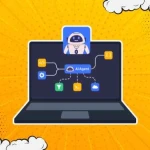







BackBox has launched Kilter AI, an AI-powered intelligence layer for its network cyber resilience platform, Kilter. Rather than giving an autonomous AI system unrestricted control over network infrastructure, the company is positioning Kilter AI as a decision-support layer that helps NetSecOps teams assess vulnerabilities, build remediation workflows and automate repetitive tasks while keeping humans responsible for approval.
Network infrastructure is becoming an increasingly difficult place to introduce autonomous AI. A modern enterprise may have hundreds or thousands of devices from different vendors, constantly changing configurations and a growing stream of vulnerabilities that need to be assessed without disrupting production.
BackBox is taking a deliberately cautious approach.
The network cyber resilience company has launched Kilter AI, an intelligence layer within its renamed Kilter platform. The technology is designed to help network and security operations teams interpret vulnerability information, identify remediation options and create automations without handing an AI agent unrestricted authority over critical infrastructure.
That human-in-the-loop model is the central idea behind the launch. Rather than treating AI as an autonomous operator, BackBox describes Kilter AI as a “trusted advisor” that recommends actions while network professionals retain responsibility for reviewing and approving them.
The approach reflects a wider debate around agentic AI for IT operations. Vendors across networking and cybersecurity are increasingly building systems capable of analyzing telemetry, recommending changes and eventually executing remediation. The attraction is obvious: IT teams face growing infrastructure complexity and a shortage of specialists, making manual network administration difficult to scale.
The risk is that an incorrect automated configuration change can create an outage or open a security hole.
BackBox says Kilter AI is designed to address that trade-off by combining AI with its existing network infrastructure knowledge and automation library. The company says its system can normalize vulnerability information from sources including CISA, NVD, NIST and individual vendors, giving teams additional context for determining which vulnerabilities require attention.
One feature focuses on CVE workaround intelligence. Instead of assuming that every vulnerability requires an immediate software upgrade or patch, Kilter AI can surface configuration-based workarounds where available. Teams can then search device configuration files to determine whether the workaround is already present and whether affected systems actually require remediation.
The platform can also turn workaround information into visual “chains” representing potential remediation workflows. Engineers can inspect and modify those chains before execution rather than accepting an opaque AI-generated action.
Another capability, the Automation Creation Assistant, is aimed at reducing the scripting burden associated with network operations. BackBox says users can provide command-line instructions and turn them into device-aware automation that can be previewed, saved, executed or reused for tasks such as backups and compliance checks.
The need for better vulnerability prioritization is substantial. A 2025 review of CVE data recorded 48,185 published CVEs, up about 20.6% from 2024. That figure comes from security researcher Jerry Gamblin’s analysis rather than a vendor or government statistics agency, so it should be treated as an independent estimate rather than an official CVE count.
Separately, research from the Ponemon Institute found that 60% of breach victims surveyed said they were breached because a known vulnerability remained unpatched. The same study found that 52% of respondents believed manual processes put their organizations at a disadvantage when responding to vulnerabilities.
Those numbers help explain why AI-powered vulnerability management and network automation are gaining attention. The challenge is no longer simply finding security flaws. Teams need to determine which systems are affected, understand the operational context, identify the safest remediation and execute it consistently across heterogeneous infrastructure.
Cisco’s networking research points in the same direction. Its 2024 Global Networking Trends research found that 60% of IT leaders and professionals expected to have AI-enabled predictive network automation across network domains within two years.
Kilter AI therefore lands in an emerging category between traditional network automation and fully autonomous network operations. Cisco, Microsoft, Google and other major technology vendors are investing in AI-assisted infrastructure management, while specialized companies are attempting to apply AI to narrower operational problems.
BackBox’s differentiation is its emphasis on controlled autonomy. Its Kilter platform combines three layers: Kilter AI for intelligence, Kilter ALM for device lifecycle automation, and Kilter Enterprise for compliance, policy and infrastructure integrity. BackBox says Kilter ALM supports more than 180 vendors and includes more than 3,000 prebuilt automations.
The company’s longer-term goal is more ambitious. BackBox says Kilter AI will form the foundation for progressively more agentic NetSecOps, allowing networks to reason about problems and eventually take more actions with less human intervention.
That progression may be more practical than jumping directly to autonomous network agents. For critical infrastructure, trust is likely to be earned incrementally. An AI system that explains why it recommends a configuration change, identifies the data behind the recommendation and waits for an engineer’s approval may be easier for enterprises to deploy than a black-box agent with direct production access.
As AI moves deeper into network management, the competitive question may therefore not be whether enterprises will automate operations, but how much authority they are willing to give their AI systems. BackBox is betting that the path to autonomous NetSecOps starts with keeping an experienced human firmly in the loop.
Market Landscape
AI-powered network management is moving from predictive analytics toward AIOps, agentic automation and autonomous infrastructure. Vendors are increasingly using AI to correlate telemetry, identify anomalies, prioritize vulnerabilities and recommend remediation.
Cisco’s research found that 60% of IT leaders expected AI-enabled predictive network automation across network domains within two years. More recent Cisco research also found that 98% of IT leaders consider autonomous AI-powered networks important to future growth, while only 41% had deployed the intelligent capabilities needed to make networks adaptive.
BackBox is targeting the gap between those ambitions and production reality by emphasizing human-approved automation rather than immediate full autonomy.
The approach is particularly relevant to AI infrastructure because the network has become foundational to cloud computing, data centers and AI workloads. As AI traffic grows, infrastructure teams must manage both conventional network complexity and the additional performance, security and availability demands created by AI systems.
Top Insights
- BackBox’s Kilter AI adds AI-powered vulnerability intelligence and automation assistance while keeping network engineers responsible for reviewing and approving actions.
- The platform combines CVE data, configuration analysis and remediation workflows to help teams prioritize vulnerabilities and reduce manual network-security work.
- BackBox is targeting controlled agentic NetSecOps rather than immediate autonomous network management, reflecting concerns about AI decisions affecting critical infrastructure.
- Cisco research shows 60% of IT leaders expect AI-enabled predictive network automation across network domains within two years.
- Kilter combines AI intelligence, lifecycle automation and enterprise compliance capabilities into a single network cyber resilience platform.
Power Tomorrow’s Intelligence — Build It with TechEdgeAI