

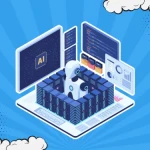




Astreya Unveils AI OpsHub: A New AIOps Platform for Hybrid IT marks a bold step into the crowded AIOps market, offering enterprises a unified “operational brain” that promises to turn opaque, multi‑cloud environments into transparent, cost‑controlled ecosystems. Announced from San Jose on April 14, 2026, the AI OpsHub platform bundles proprietary tooling with deep integrations to Google Cloud and ServiceNow, positioning itself as a direct challenger to incumbents such as ServiceNow ITOM, Splunk Observability Cloud, and Dynatrace.
What AI OpsHub Claims to Deliver
At its core, AI OpsHub is billed as an “operational brain” that captures millions of discrete IT actions—ticket updates, script executions, configuration changes—and applies enterprise‑grade machine learning to make each step visible, accountable, and optimizable. The platform’s architecture rests on four pillars: data ingestion from heterogeneous sources, a knowledge graph that models “operational DNA,” explainable AI that surfaces the “why” behind recommendations, and a library of pre‑mapped workflows drawn from over two million historical tasks.
How the Technology Works
Astreya’s engineers have stitched together four internal solutions—Ara, Lynx, Pyxis, and Pictor—into a single orchestration layer. Data streams from Google Cloud’s operations suite and ServiceNow’s ITSM modules feed a unified telemetry lake, where custom feature extraction pipelines translate raw logs into actionable signals. A hybrid model, blending supervised learning with reinforcement techniques, then scores each signal for risk, cost impact, and compliance relevance. The result is a real‑time dashboard that not only surfaces anomalies but also suggests remediation steps, complete with confidence scores and traceable provenance.
Why the Announcement Matters
The AIOps market, projected by Gartner to exceed $12 billion by 2027, has long suffered from a visibility gap: organizations can monitor infrastructure health but struggle to map that data to business outcomes. Astreya’s focus on “decision integrity” and explainability directly addresses this shortfall. According to IDC, 62 % of CIOs cite “lack of actionable insight” as the top barrier to AI adoption in IT operations. By turning tacit knowledge—often locked in the heads of senior engineers—into codified, AI‑driven policies, AI OpsHub promises to reduce mean time to resolution (MTTR) and, by extension, operational spend.
Industry Context and Competitive Landscape
ServiceNow’s IT Operations Management suite has dominated large enterprises with its low‑code workflow engine, yet it has been critiqued for limited AI transparency. Splunk’s Observability Cloud offers powerful log analytics but relies heavily on manual correlation. Dynatrace’s AI engine, Davis, excels at automatic root‑cause analysis but is tied closely to its own monitoring agents. AI OpsHub differentiates itself by emphasizing cross‑vendor data federation and a pre‑built repository of millions of operational tasks, a feature that could appeal to regulated sectors where data sovereignty and auditability are non‑negotiable.
Implications for Enterprise Marketing Teams
For marketing teams, IT reliability translates directly into campaign uptime and customer experience. AIOps platforms that shrink MTTR can prevent website outages, ensure smooth data pipeline flows for personalization engines, and keep CRM integrations alive during high‑traffic events. By automating routine remediation, AI OpsHub frees IT staff to focus on strategic initiatives—such as deploying AI‑powered recommendation engines—that directly boost marketing ROI.
Strategic Partnerships and Roadmap
Astreya has announced that AI OpsHub will be showcased at Google Cloud Next 2026 and ServiceNow Knowledge 2026, signaling a collaborative approach rather than a purely competitive stance. The company hints at a broader 2026 roadmap that will extend the platform’s capabilities into generative AI‑driven incident response and autonomous remediation, aligning with the broader industry shift toward AI agents that can act without human intervention.
Potential Challenges
Adoption will hinge on integration complexity and the organization’s data maturity. Enterprises with siloed data lakes may face steep onboarding costs, and the platform’s reliance on proprietary AI models could raise concerns about vendor lock‑in. Moreover, explainable AI remains an evolving field; delivering truly transparent recommendations at scale will require continuous model validation—a task that many AIOps vendors still wrestle with.
Market Landscape
The AIOps sector is entering a phase of consolidation, with major cloud providers—Google, Amazon, Microsoft—embedding AI capabilities into their native monitoring services. IDC forecasts a compound annual growth rate (CAGR) of 28 % for AI‑driven IT operations through 2028, driven by the need to manage ever‑more complex, hybrid environments. Enterprises are increasingly demanding solutions that combine observability, automation, and governance. AI OpsHub’s emphasis on cross‑cloud data ingestion and explainable AI aligns with these market pressures, but success will depend on its ability to integrate seamlessly with existing toolchains and deliver measurable cost savings.
Top Insights
- Unified Visibility: AI OpsHub aggregates data from Google Cloud, ServiceNow, and Astreya’s own tools, creating a single pane of glass for hybrid IT environments.
- Explainable AI: The platform surfaces the reasoning behind each recommendation, addressing a key Gartner‑identified barrier to AI trust in IT operations.
- Enterprise‑Ready: Pre‑mapped workflows and a two‑million‑task knowledge base accelerate deployment, especially for regulated industries with strict audit requirements.
- Competitive Edge: By focusing on decision integrity rather than just anomaly detection, AI OpsHub differentiates itself from ServiceNow and Splunk’s more siloed offerings.
- Marketing Impact: Faster incident resolution safeguards digital campaigns, directly supporting enterprise revenue goals.
Power Tomorrow’s Intelligence — Build It with TechEdgeAI