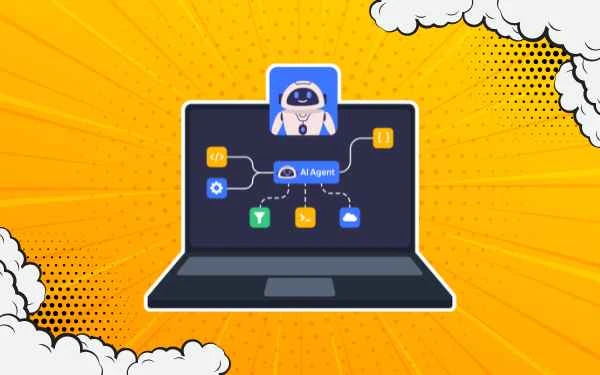









The AI market has reached a point where having too many choices can be its own productivity problem. Ask-Chat.ai is positioning its platform as a single interface for more than 20 AI models, allowing users to switch between models during a conversation instead of maintaining multiple subscriptions and chatbot windows.
The AI industry’s biggest consumer problem may no longer be finding an AI chatbot. It may be deciding which one to use for a particular task.
New models arrive frequently, each promising improvements in reasoning, coding, research, writing or multimodal capabilities. For users, that can translate into a growing collection of subscriptions, browser tabs and increasingly complicated decisions about which model should handle a particular request.
Ask-Chat.ai is attempting to simplify that experience with what it describes as a “universal remote for AI.”
The platform provides access to more than 20 AI models through one interface, including GPT-5.6, Claude Opus 4.8, Gemini Pro and Grok, according to the company. Users can switch between models during an existing conversation rather than starting over in another chatbot.
The idea is straightforward: instead of asking one AI system to handle every task, let users choose the model that best fits the job.
That approach reflects a broader change in the AI market. As model capabilities become more differentiated, the competition may increasingly be about orchestration and access, not simply which company has the smartest standalone chatbot.
AI fatigue is becoming a product problem
The first wave of consumer generative AI was built around simplicity. Open a chatbot, type a question and receive an answer.
That simplicity has become harder to maintain.
A user might rely on one model for writing, another for coding, another for research and another for image generation. The problem is that every new capability can introduce another interface, account or subscription.
The result is a paradox: AI tools designed to save time can create additional workflow overhead.
Ask-Chat.ai’s pitch is based on reducing that friction. Rather than requiring users to maintain separate environments for different models, the platform puts multiple systems behind a common interface.
That could be particularly attractive to power users who already compare outputs across leading AI platforms.
Model switching changes the role of the chatbot
The more interesting feature is not simply access to multiple models. It is the ability to switch models mid-conversation.
That turns the platform from a collection of chatbots into something closer to an AI routing layer.
Consider a business workflow. A user might begin with one model to brainstorm a marketing campaign, switch to another to refine the writing, move to a different system for data analysis and then use a research-focused model to verify information.
In a conventional chatbot environment, that process can involve copying prompts and context between applications.
A multi-model interface attempts to keep the workflow in one place.
That distinction matters because context is often as valuable as the underlying model. Moving between systems can require users to reconstruct the conversation, upload files again or explain the task from scratch.
The AI market is becoming an ecosystem rather than a single race
The strategy also reflects the increasingly fragmented AI landscape.
Microsoft is embedding AI throughout its productivity ecosystem. Google is developing Gemini across search, productivity and cloud services. OpenAI continues to advance its model and application ecosystem, while Anthropic has established Claude as a major enterprise and developer platform. xAI’s Grok is another significant competitor.
Amazon, meanwhile, has taken a more infrastructure-oriented approach through AWS and Amazon Bedrock, giving organizations access to multiple foundation models rather than requiring them to commit to one.
That creates an important market distinction.
The AI industry’s long-term winner may not necessarily be the company with a universally superior model. Different models can excel at different workloads, and model performance can change rapidly as new versions arrive.
A platform that makes model selection easier is therefore betting on heterogeneity rather than consolidation.
One subscription does not automatically solve AI’s reliability problem
There is, however, an important caveat.
Giving users access to multiple models does not eliminate the need to understand their limitations.
A model that performs well at writing may not be the right choice for numerical analysis. A model with web access can still produce incorrect conclusions. And switching models does not inherently guarantee factual accuracy or better reasoning.
The real value of a multi-model platform therefore depends on how effectively it helps users choose among models and manage the resulting outputs.
For enterprise users, additional questions would include data privacy, retention policies, model-specific terms, administrative controls and whether sensitive company information is routed through third-party AI providers.
Those considerations become particularly important when a platform sits between users and several external AI systems.
AI orchestration could become the next battleground
Ask-Chat.ai’s approach points toward a potentially important direction in the consumer AI market: model-agnostic AI interfaces.
The first phase of generative AI largely trained users to develop loyalty to individual assistants. The next phase may make the underlying model less visible.
Users may increasingly care about whether a system can find the right model, preserve context, handle files, conduct research, generate images and produce a reliable answer—not which model generated every individual response.
That would represent a meaningful shift in the AI user experience.
The “universal remote” analogy captures the concept well. Just as consumers do not need to understand the electronics inside a television to change channels, a multi-model AI interface could eventually make model selection an implementation detail.
For now, however, the challenge is balancing convenience with transparency.
As the number of capable AI models continues to grow, platforms like Ask-Chat.ai are betting that users would rather manage one AI workspace than an ever-expanding collection of chatbots.
Market Landscape
The AI application market is moving toward a more fragmented model ecosystem. Rather than relying exclusively on a single foundation model, consumers and enterprises increasingly have access to multiple models with different strengths in reasoning, coding, research, multimodal interaction and content generation.
That creates an emerging AI orchestration layer between users and model providers.
Ask-Chat.ai is competing in that layer by emphasizing a unified interface, model switching and additional capabilities such as image generation, file uploads and voice input.
The broader competitive landscape includes direct chatbot providers such as OpenAI, Anthropic, Google and xAI, alongside infrastructure platforms such as Amazon Bedrock that allow developers and businesses to work with multiple models.
For enterprise buyers, the deciding factors will likely extend beyond model count. Security, governance, data handling, output quality, model routing and total cost will become increasingly important.
Top Insights
- Ask-Chat.ai is consolidating access to more than 20 AI models, allowing users to switch between systems without maintaining separate chatbot workflows.
- The platform targets AI fatigue by reducing the need to manage multiple subscriptions, interfaces and model-specific workflows for different tasks.
- Model switching could make AI orchestration more important as users increasingly recognize that different models perform better across writing, research, coding and analysis.
- OpenAI, Anthropic, Google, xAI and Amazon are competing across different layers of the AI ecosystem, creating opportunities for model-agnostic interfaces.
- Enterprise adoption will depend on more than convenience, with privacy, governance, data handling, reliability and model-selection transparency becoming critical considerations.
Power Tomorrow’s Intelligence — Build It with TechEdgeAI