








Generative AI has made it easier than ever to reproduce recognizable characters, creative assets and visual aesthetics. The harder problem is determining what happened behind the output—and what rights holders can do about it. ARCOS Labs, the company behind VN and Lightbar, is entering that gap with an AI-focused rights infrastructure platform designed to help studios, creators and intellectual-property owners detect, measure and respond to potential AI reproduction of their work.
The generative AI industry has spent the past several years building systems capable of producing increasingly convincing images, video, music and text. A parallel infrastructure for proving where those outputs came from, how closely they resemble existing creative works and whether rights holders can enforce their claims has been slower to emerge.
ARCOS Labs wants to change that.
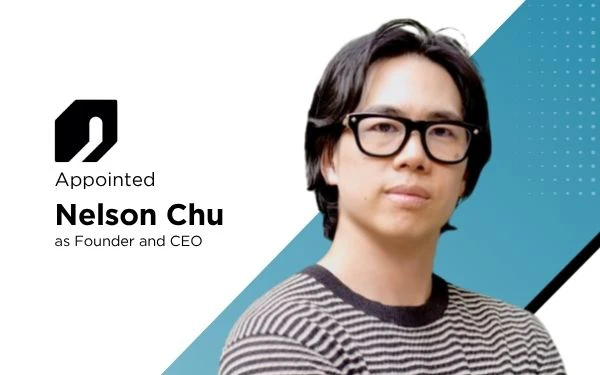
The company, whose name stands for Applied Research in Creative Output Synthesis, has launched publicly with Nelson Chu as founder and CEO. It is positioning itself as an infrastructure company for the creative economy, with products aimed at studios, talent agencies, creators and other rights holders navigating the growing overlap between generative AI and intellectual property.
Its two products take different approaches.
VN is the company’s flagship platform. ARCOS says its proprietary “fidelity recognition engine” analyzes AI-generated content to measure how closely outputs correspond to specific characters, intellectual property and human likenesses.
Lightbar, meanwhile, is designed as a community-powered research product. It allows participants to investigate whether creative works may have appeared in AI training datasets, with findings potentially useful for copyright investigations and legal proceedings. Lightbar’s public materials describe the platform as investigative research rather than a content-generation service.
The distinction is important because the AI rights problem has at least two separate layers.
The first concerns training data: whether copyrighted works, images or other protected material were incorporated into datasets used to train AI systems.
The second concerns model outputs: whether an AI system can reproduce protected characters, recognizable creative assets or a person’s likeness with sufficient fidelity to create legal, commercial or reputational risk.
ARCOS is attempting to build tools for both sides.
The company says VN has already produced forensic reports for studios and talent agencies, documenting how AI models can reproduce protected characters and human likenesses. It is also exploring trials with major studios and rights holders.
The business arrives after a highly visible moment in the AI copyright debate.
In March 2025, social media was flooded with AI-generated images resembling the distinctive visual aesthetic associated with Studio Ghibli after OpenAI expanded image-generation capabilities in ChatGPT. The phenomenon reignited questions over training data, artistic style and the limits of copyright protection.
The episode was significant not because it settled any legal question—it did not—but because it demonstrated how quickly a generative model can turn a recognizable creative aesthetic into a mass-market consumer experience.
It also exposed the mismatch between AI’s speed and conventional rights enforcement.
A studio can spend decades building characters, franchises and visual identities. A generative AI system can produce thousands of derivative-looking outputs in minutes. Monitoring that activity manually becomes increasingly impractical.
That is the market ARCOS is targeting.
Chu, who previously founded private-credit platform Percent, says the Ghibli moment helped crystallize the need for infrastructure that gives creators greater visibility and control. ARCOS describes the current situation as an inflection point for creative rights, arguing that AI development has moved faster than the mechanisms available to rights holders.
There is a reasonable market opportunity here, but also a difficult technical challenge.
Detecting similarity is not equivalent to proving infringement.
Copyright law generally protects specific expression rather than abstract artistic style, while characters, trademarks, likeness rights and other forms of intellectual property can involve different legal standards. The European Commission’s IP Helpdesk noted after the Ghibli controversy that the legal questions surrounding AI-generated works, training data and stylistic imitation remain unsettled.
That means a system capable of saying that an AI output resembles a copyrighted work is potentially valuable evidence, but it does not by itself establish that a violation has occurred.
ARCOS’s language around fidelity measurement is therefore strategically important. Rather than simply labeling content as “AI infringement,” the company says VN measures how closely an output corresponds to an original creative asset.
For studios, that could support several workflows: monitoring models for unauthorized reproduction, assessing risks before using AI-generated material, investigating suspected infringement and evaluating whether AI tools can safely be incorporated into production.
This makes ARCOS less directly comparable with generative AI companies such as OpenAI, Google or Adobe. Those companies are primarily building systems that create, edit or distribute content. ARCOS is building an infrastructure layer around the rights and provenance of that content.
Other technologies approach pieces of the same problem. Content credentials and provenance systems can help establish information about how media was created or modified, while artist-protection tools such as Glaze have focused on disrupting AI models’ ability to mimic individual artists. ARCOS is taking a different route by emphasizing measurement and forensic analysis after or during AI generation.
The distinction could become increasingly relevant as AI enters professional creative workflows.
Studios are unlikely to abandon generative AI simply because rights questions exist. The economic incentives are too strong. Instead, the industry is likely to demand systems that allow AI to be used with greater visibility into what models can reproduce and where risk emerges.
For enterprise creative teams, that means AI governance may eventually include a new requirement: rights intelligence.
Before an organization puts an AI-generated character into a film, advertisement, game or commercial product, it may need to know whether the output is too close to protected material. After deployment, rights holders may need continuous monitoring for unauthorized reproduction.
ARCOS is betting that this becomes a software category of its own.
The company is also stepping into a competitive landscape where AI regulation and copyright litigation are evolving rapidly. The major AI labs are developing increasingly sophisticated content-generation systems, while publishers, artists, studios and technology companies continue to debate licensing, compensation, provenance and training-data practices.
For ARCOS, the opportunity is to become the measurement and enforcement layer between those groups.
The bigger question is whether automated fidelity analysis can become precise enough to satisfy legal teams and reliable enough to fit into production workflows without slowing down the creative process.
If it can, AI rights infrastructure could become as important to the creative economy as security and observability have become to enterprise software.
Generative AI has made creative reproduction cheap and fast. The next infrastructure battle may be about making that reproduction visible, measurable and governable.
Market Landscape
The AI copyright market is forming around several distinct technology categories.
Generative AI platforms such as OpenAI, Google and Adobe are focused on creating and editing content.
Content provenance technologies attempt to preserve information about the origin and modification history of digital media.
Artist-protection tools seek to make it harder for models to imitate specific creative works or styles.
AI rights and forensic platforms, the category ARCOS is targeting, aim to identify how closely AI outputs correspond to protected assets or investigate whether works may have entered training datasets.
The need for such tools is being amplified by the increasing capabilities of generative models. The 2025 Ghibli phenomenon demonstrated how quickly AI-generated visual styles can spread at consumer scale, while legal experts continue to debate the boundaries between permissible stylistic imitation and infringement.
For enterprise buyers, the emerging lesson is that AI governance cannot be limited to model selection and security. Organizations working with valuable intellectual property may also need output testing, provenance, rights monitoring and documented evidence.
Top Insights
- ARCOS Labs launches VN and Lightbar to help studios and rights holders measure AI reproduction, investigate potential training-data use and strengthen creative IP enforcement.
- VN uses fidelity analysis to assess AI-generated outputs against creative assets, while Lightbar focuses on investigating whether works may have entered AI training datasets.
- The 2025 Studio Ghibli AI-image phenomenon demonstrated how quickly generative models can reproduce recognizable aesthetics, intensifying debates around copyright, training data and creator consent.
- ARCOS enters a market distinct from generative AI platforms, targeting the emerging infrastructure layer for rights intelligence, forensic analysis and AI governance.
- Enterprise creative teams could increasingly use AI rights tools to evaluate generated content before commercial release and document potential IP risks during production.
Power Tomorrow’s Intelligence — Build It with TechEdgeAI