





AppDirect is adding Soul Machines’ AI avatar technology to its Devs.ai platform following its acquisition of the company, giving businesses a way to deploy interactive digital avatars across customer support, employee services, training and commerce. The move comes as enterprise AI shifts from text-based assistants toward multimodal interfaces and agentic workflows that can operate across business applications.
Enterprise AI is increasingly moving beyond the chatbot interface. As businesses connect generative AI to internal systems and workflows, the next challenge is making those systems accessible to employees and customers without requiring them to learn complicated prompts or navigate multiple applications.
AppDirect is addressing that interface layer through its acquisition of Soul Machines, a company known for AI avatars and human-centered digital experiences. The transaction brings Soul Machines’ technology into AppDirect’s AI strategy and will see its avatar capabilities embedded in Devs.ai, AppDirect’s platform for building and managing business AI tools.
Financial terms were not disclosed. Soul Machines will operate as a standalone business within AppDirect’s portfolio, while its technology becomes part of the company’s broader enterprise AI offering.
The immediate objective is relatively straightforward: allow businesses to add interactive avatars to AI applications used internally or externally.
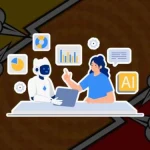
Soul Machines’ technology is designed around digital characters that can interact through visual, voice and conversational interfaces. Rather than presenting an AI system exclusively through text, an avatar can become the visible interface through which a customer or employee asks questions, receives guidance or completes a workflow.
AppDirect says potential applications include customer support and self-service, learning and development, onboarding and training, employee help desks and digital commerce assistance.
AI interfaces are becoming part of the application layer
The acquisition arrives as enterprise AI platforms increasingly combine large language models with retrieval, tools, connectors and workflow automation.
Gartner defines enterprise AI assistants as AI-first applications that combine generative AI with capabilities such as retrieval-augmented generation, reasoning, agentic tools and enterprise security. The firm describes these assistants as becoming a front door through which employees research information, analyze data and streamline work.
That evolution changes the role of the interface.
A conventional chatbot generally answers a question. An enterprise AI agent can potentially retrieve information from business systems, invoke tools and complete actions. A multimodal avatar adds another presentation layer, allowing the same underlying AI capabilities to be delivered through voice, video and visual interaction.
The result is a stack in which the model, agent framework, enterprise data and user interface can be separate components.
AppDirect’s Devs.ai strategy is built around making those components easier to deploy. According to the company, users will be able to add a fully functioning Soul Machines avatar to projects created for internal use or external deployment, without building the underlying avatar infrastructure themselves.
That could make digital avatars less of a specialized technology project and more of a configurable component in enterprise AI applications.
From conversational AI to task-oriented systems
The timing also reflects a broader shift toward AI agents.
Gartner forecasts worldwide spending on AI agents and assistants will reach $29.2 billion in 2026, compared with $16.5 billion in 2025. The research firm says software vendors are increasingly embedding agentic AI into existing applications as enterprises look for automation and workflow improvements.
Gartner separately projects that the market for cross-functional AI agents and assistants will exceed $23 billion in spending by 2030, with a 59% compound annual growth rate from 2025 through 2030.
Those numbers help explain why the interface is becoming strategically important. If AI systems can increasingly perform work rather than simply generate text, companies need ways for users to delegate that work, review results and interact with the system.
AppDirect’s approach is to make that interaction more visual and conversational.
For example, an employee help-desk application could use an avatar to guide a worker through an IT problem. A training application could use an interactive character for role-play. A commerce application could provide a conversational digital representative to help customers find products or services.
The underlying AI capabilities still determine whether those experiences are useful. The avatar does not independently solve problems with accuracy, data access or workflow permissions.
Distribution is part of the strategy
The acquisition also gives Soul Machines access to AppDirect’s existing B2B technology ecosystem.
AppDirect operates a subscription commerce platform connecting technology providers, advisors and businesses. The company says its ecosystem includes more than 1,000 technology providers, 14,000 advisors and 16 million subscribers.
That distribution model could be significant for a specialized AI technology that previously needed to be integrated into individual enterprise deployments.
For AppDirect, the acquisition expands the types of AI products that partners can offer. Instead of simply helping customers purchase software subscriptions, its ecosystem can increasingly be used to deploy AI applications with specialized interfaces.
The strategy also aligns with the economics of enterprise AI software. Gartner forecasts total worldwide AI spending at $2.7 trillion in 2026, up 49.5% year over year, while AI software spending is projected at $461.6 billion.
As spending expands, competition is moving beyond model access. Microsoft, Google, Amazon, Salesforce and other major vendors are embedding AI assistants and agents directly into enterprise software. Gartner’s September 2026 research identifies vendors including Microsoft, Google, Amazon Web Services, OpenAI and Salesforce among the enterprise AI assistant landscape.
Specialized companies therefore need differentiated capabilities, whether through domain expertise, agent orchestration, data integration or user experience.
Soul Machines represents the latter category.
The practical test will be enterprise deployment
The acquisition gives AppDirect a way to connect AI application development with a more human-facing interface. But successful deployment will depend on factors beyond how realistic an avatar appears.
Enterprise customers will need reliable model behavior, access controls, data governance, integration with existing systems and clear boundaries around what an AI agent can do autonomously.
Gartner’s current enterprise AI assistant research specifically highlights connectors, agent management, governance controls, context and memory management as important capabilities alongside agentic workflows.
That means Soul Machines’ technology is likely to be most useful when the avatar is treated as the interface to a governed AI application rather than as the AI system itself.
For AppDirect, the acquisition establishes that interface as another component of its enterprise AI stack. By placing Soul Machines inside Devs.ai, the company is betting that businesses will want AI applications that not only reason and automate, but also communicate in ways that feel more natural to the people using them.
Market Landscape
Enterprise AI is moving toward applications that combine LLMs, retrieval, agentic tools, enterprise connectors and governance. Gartner’s September 2026 research identifies agent ecosystems, connectors, administration controls, context and memory management as core capabilities of enterprise AI assistants.
The conversational AI market is also evolving toward multimodality and agentic AI, with vendors competing around voice, automation, orchestration and enterprise integration.
Against that backdrop, AppDirect’s Soul Machines acquisition adds a visual and conversational interface layer to an AI application platform. The strategy connects AI development, distribution and end-user experience rather than treating avatar technology as a standalone product.
Top Insights
- AppDirect is embedding Soul Machines’ AI avatar technology into Devs.ai for internal and external enterprise AI applications.
- Potential use cases include customer support, employee help desks, training, onboarding, learning and digital commerce.
- Gartner forecasts $29.2 billion in worldwide spending on AI agents and assistants during 2026.
- Enterprise AI assistants increasingly combine LLMs with retrieval, agentic tools, connectors, governance and contextual enterprise data.
- The acquisition positions digital avatars as an interface layer for AI applications rather than a replacement for underlying models and agents.
Power Tomorrow’s Intelligence — Build It with TechEdgeAI