








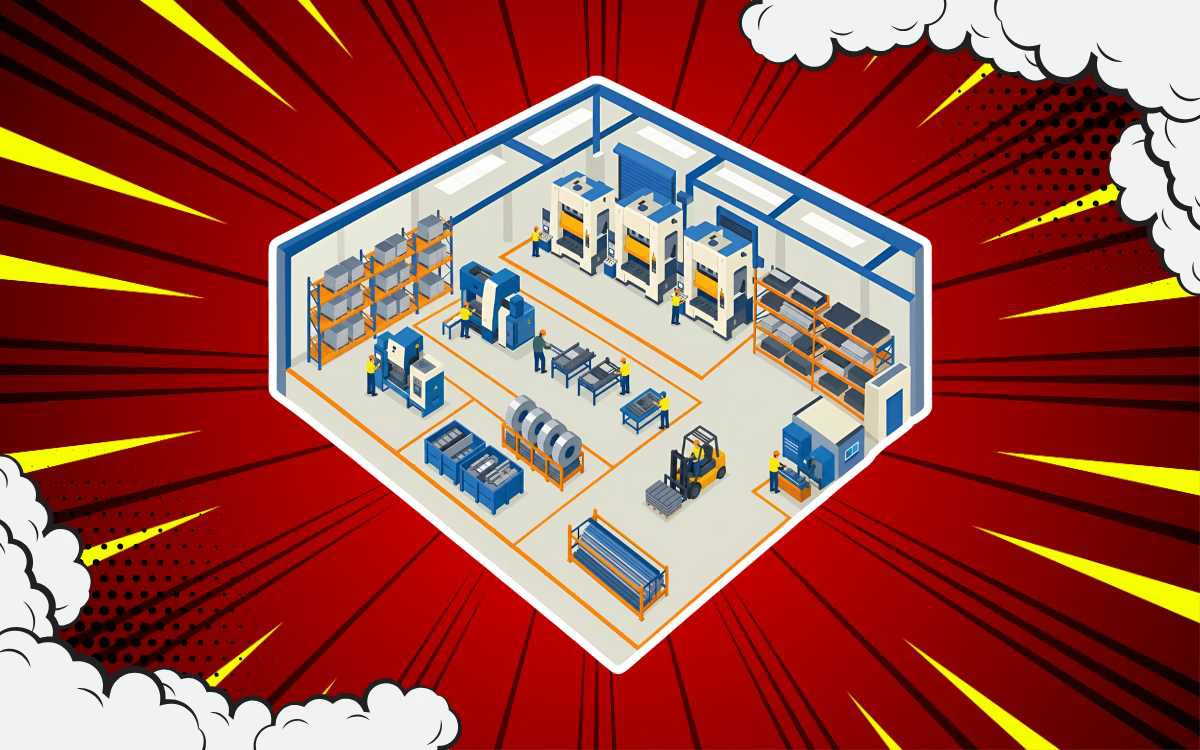
Altimetrik Rolls Out Industrial AI Suite – the London‑based AI‑native engineering firm announced a trio of AI‑powered solutions—Smart Machines, Smart Plants and Smart Operations—designed to embed intelligence directly into manufacturing equipment, factory floors and supply‑chain networks.
What the Suite Offers
Altimetrik’s new service line bundles three modular components that can be deployed singly or as an integrated stack. Smart Machines equips individual pieces of equipment with edge‑native models that monitor sensor streams, generate digital twins and trigger predictive‑maintenance actions before a fault escalates. Smart Plants aggregates data across a production line, delivering real‑time OEE (overall equipment effectiveness) analytics, quality‑prediction engines and closed‑loop control that enable “zero‑touch” operations. Smart Operations extends the same AI logic into logistics, procurement and after‑sales service, using supply‑chain analytics to cut working‑capital needs and open new revenue streams.
Technology Under the Hood
All three solutions run on Altimetrik’s ALTi AIOS™ platform, a hybrid cloud‑edge architecture that keeps inference latency at the millisecond level. By leveraging containerized models, digital‑twin synchronization and federated learning, the suite avoids the costly hardware refreshes typical of legacy automation upgrades. The approach mirrors the way Google Cloud’s Vertex AI or Microsoft Azure’s Industrial IoT services push models to the edge, but Altimetrik emphasizes a “human‑at‑the‑helm” governance layer that keeps operators in the decision loop.
Why It Matters
Manufacturers have long struggled to translate pilot‑scale AI experiments into sustainable production gains. According to Gartner, 30 % of factories will have deployed AI‑driven automation by 2027, yet only a fraction achieve measurable ROI. Altimetrik’s claim—rooted in the “waste removal” metric quoted by CEO Raj Sundaresan—directly addresses that gap: less downtime, lower scrap rates and reduced inventory lock‑up. Forrester research estimates that predictive‑maintenance AI can trim equipment downtime by up to 40 %, a figure that aligns with the suite’s promise to correct issues before they disrupt the line.
Competitive Context
The industrial AI market is crowded. Siemens’ MindSphere and PTC’s ThingWorx provide extensive connectivity, while Amazon Web Services offers SageMaker Edge for on‑premise inference. Altimetrik differentiates itself by bundling advisory, pilot‑to‑platform and transformation services into a single engagement, a model reminiscent of Salesforce’s AI‑first consulting practice. The company also highlights a partnership with Lakshmi Machine Works (LMW), an Indian textile‑machinery leader, as a proof point that the suite can be retrofitted onto existing plant assets without wholesale equipment replacement.
Implications for Enterprise Marketing Teams
From a B2B marketing perspective, the announcement creates a new narrative arc: AI is no longer a siloed analytics layer but a production‑line co‑pilot. Marketers can position the suite as a catalyst for “AI‑enabled revenue streams,” a phrase that resonates with CFOs looking to monetize data. Content strategies should pivot from generic AI hype to concrete use cases—such as reduced OEE variance or accelerated time‑to‑market for new product variants—while aligning messaging with the broader AI ecosystems of Google, Microsoft and Adobe that many enterprise buyers already trust. Enterprise marketing teams can leverage this narrative to deepen engagement across the funnel.
How It Impacts the Industry
If the suite delivers on its promises, manufacturers could see a shift from reactive maintenance to proactive, self‑optimizing operations. The ripple effect would touch downstream logistics, where Smart Operations’ supply‑chain analytics could synchronize inventory replenishment with real‑time production capacity. In sectors ranging from semiconductor fabs to aerospace OEMs, the ability to scale AI from a single machine to plant‑wide autonomy could compress product development cycles and improve compliance with stringent quality standards.
Market Landscape
The industrial AI segment is projected to grow at a CAGR of 28 % through 2028, driven by rising demand for edge computing, the proliferation of IoT sensors, and tighter ESG (environmental, social, governance) mandates. While legacy SCADA systems still dominate many factories, newer entrants like Altimetrik are leveraging AI to retrofit those environments. Competitive pressure is intensifying as cloud giants deepen their manufacturing partnerships—Microsoft’s Azure IoT Central now integrates with Siemens’ Digital Industries Software, and Google’s AI Platform is being used to train vision models for defect detection. Altimetrik’s focus on a “human‑at‑the‑helm” philosophy may appeal to risk‑averse manufacturers who are wary of fully autonomous systems.
Top Insights
- Altimetrik’s three‑part suite targets the full manufacturing value chain, from machine‑level predictive maintenance to enterprise‑wide supply‑chain optimization.
- By running AI at the edge, the platform promises millisecond‑scale decisions that rival the latency of Google Vertex AI and Azure IoT Edge.
- The partnership with LMW demonstrates a path to AI adoption without costly hardware overhauls, a key selling point for legacy‑heavy factories.
- Gartner predicts 30 % AI automation adoption in manufacturing by 2027; Altimetrik’s service‑first model could accelerate that timeline for early adopters.
- Enterprise marketers can reframe AI as a revenue‑generation engine, using concrete ROI metrics to differentiate from generic AI hype.
Power Tomorrow’s Intelligence — Build It with TechEdgeAI