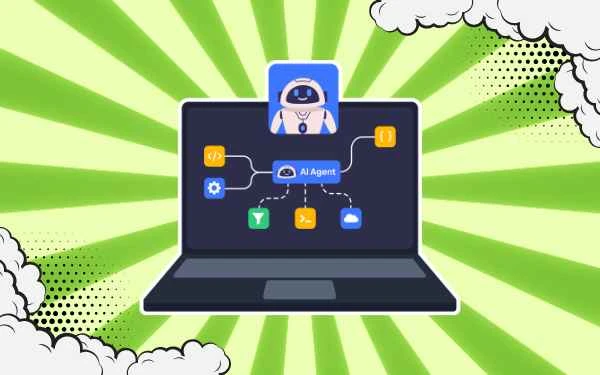








Cybersecurity company Abstract has expanded its agentic security information and event management (SIEM) platform with AI-powered investigation, threat hunting, alert triage and automated response capabilities. The system combines proprietary models trained and tuned by Abstract’s ASTRO threat research team with frontier foundation models, while integrating security orchestration, automation and response (SOAR) actions directly into detection rules. The launch targets a persistent security operations challenge: investigating growing volumes of alerts quickly enough to identify real threats without overwhelming analysts or adding another disconnected AI product to the security stack.
Abstract Expands Agentic SIEM With AI Investigation and Response
Abstract has introduced new AI-driven security operations capabilities that extend its agentic SIEM platform from real-time security data processing and detection into investigation, threat hunting, triage and automated response.
The company says its platform combines proprietary trained and tuned models with frontier foundation models to investigate alerts, classify suspicious activity and support response decisions. SOAR functionality is also built into the platform, allowing containment, enrichment and notification actions to be assigned directly to detection rules.
The announcement reflects a broader shift in cybersecurity operations toward systems that do more than identify suspicious events. Security information and event management platforms traditionally aggregate logs and telemetry, correlate activity and generate alerts. Analysts then investigate those alerts, gather context from other tools and decide whether to escalate, contain or dismiss an incident.
That workflow can become difficult to sustain as enterprises collect data across cloud infrastructure, endpoints, identity systems, software-as-a-service applications and networks. Adding standalone AI triage products may accelerate parts of the process, but can also introduce another integration, data transfer and operational layer.
Abstract’s approach is to place AI-driven analysis within the same platform that collects and processes security data. Its existing pipeline supports more than 400 integrations, according to the company, with streaming detection designed to operate before data lands in downstream storage. The new capabilities extend that architecture to investigation and response.
Security Context Is Prepared Before Alerts Fire
A central element of Abstract’s pitch is its security data pipeline. Rather than asking an AI agent to reconstruct context from scratch each time an alert appears, the company says it normalizes and enriches events in the stream with identity information, threat intelligence and asset context.
That preparation creates what Abstract describes as an AI-ready context layer. It is intended to give investigations consistent information about the entities and systems involved in an event.
The distinction matters because security telemetry often uses inconsistent schemas. A field such as src may identify different entities depending on the data source, potentially leading to incorrect interpretations when events are combined. Normalizing these records can help downstream detection and investigation systems interpret activity more consistently.
The platform also combines findings into entity-based insights, linking relevant observations rather than treating every alert as an isolated event. In principle, that can help analysts understand how multiple signals relate to a user, endpoint, cloud resource or other entity.
However, data normalization does not eliminate every source of ambiguity. The quality of investigations still depends on the accuracy and freshness of source data, enrichment feeds, detection logic and model outputs. Abstract has not provided independent benchmark results establishing how its approach compares with competing SIEM platforms.
Proprietary Models Work Alongside Foundation Models
The new investigation and triage capabilities use a combination of Abstract’s proprietary models and frontier foundation models. The company’s ASTRO threat research team trains its models using its security research and threat intelligence expertise.
Abstract says these models support real-time classification, allowing triage decisions to feed into response workflows while security events are still moving through the platform. Foundation models provide deeper reasoning for cases that warrant additional analysis, with the company emphasizing that the evidence trail is preserved.
This hybrid architecture separates two related tasks: applying security-specific knowledge to routine classification and using broader reasoning capabilities for more complex investigations.
Abstract says its agentic SIEM works every alert in the queue, including cases that might otherwise age out or be closed in bulk when teams face excessive workloads. Instead of manually reviewing raw alerts one by one, analysts can examine investigation conclusions alongside supporting evidence.
The platform currently supports investigations involving threat intelligence detections, endpoint agent analysis, insider risk, phishing and suspicious email, and cloud attacks.
The company argues that grounding assessments in validated threat research can help address the confident but incorrect conclusions that general-purpose models may produce. That is a relevant design objective, although the announcement does not disclose model architectures, evaluation datasets, false-positive rates or comparative accuracy figures.
Automated Response Moves Closer to Detection
Abstract is also integrating SOAR actions directly into detection rules. When a detection matches, configured actions can trigger containment, enrichment or notification workflows.
Combining detection and response in one platform could reduce the handoffs between alert generation, investigation and operational action. It may also simplify deployments for organizations that currently connect separate SIEM, SOAR and AI triage systems.
Automation nevertheless requires careful controls. Containment actions can interrupt legitimate users or business services if a detection is wrong or an investigation lacks sufficient context. Enterprises evaluating agentic security tools will need to understand how actions are authorized, which steps require human approval, how errors are reversed and how response decisions are audited.
Abstract’s announcement describes the available response capabilities but does not detail all approval mechanisms, rollback options or safeguards for high-impact actions.
Early Customer Claims Need Broader Validation
Abstract cites customer feedback suggesting that its platform can shift security teams away from repetitive alert confirmation toward higher-priority investigations.
A security operations director at a healthcare insurance company said the system presents evidence across the alert queue, helping analysts focus on cases requiring human attention. A CISO at a global financial services organization claimed the deployment enabled automation of more than 60% of SOC workflows, including all Level 1 triage.
These are customer-reported results, not independently audited benchmarks. The announcement does not disclose deployment duration, workflow definitions, alert volumes or the methodology used to calculate the automation rate.
Abstract is also offering prospective customers a commercial incentive: the company says it will price below a customer’s existing SIEM bill, lock pricing for three years and provide 30 days in production before a contract is signed. The offer reflects the cost pressure associated with security data ingestion and SIEM contracts, although the actual savings will depend on each customer’s usage, migration requirements and contract terms.
The Competitive Test Is Trustworthy Automation
The market for AI-powered security operations includes established SIEM providers adding copilots and automation, as well as specialist vendors building agents that operate across existing security tools. Abstract is positioning its integrated data pipeline, security-specific models and embedded response functions as an alternative to assembling separate products.
Its main proposition is architectural: prepare context in the data stream, investigate alerts within the same environment and connect findings to response actions. If that approach delivers reliable results, it could reduce manual triage and operational complexity.
But broader adoption will depend on more than the number of alerts an AI system can process. Security teams need evidence that investigations are accurate, access is controlled, automated actions are safe and results can be audited. Independent performance data and customer outcomes across different environments will be important measures of Abstract’s progress.
Market Landscape
Security operations teams are increasingly evaluating AI to manage alert volumes, accelerate investigations and automate repetitive workflows. SIEM vendors, security automation providers and specialist AI SOC companies are competing to connect detection with investigation and response.
Abstract’s differentiator is its integrated architecture: more than 400 stated integrations, streaming data enrichment, proprietary threat-focused models, foundation-model reasoning and SOAR actions tied to detection rules.
The commercial case will depend on measurable reductions in triage effort, investigation time and total platform cost. Security teams will also need transparent evidence trails, safeguards for automated containment and independent validation of model accuracy. Abstract’s customer automation claims are promising but remain vendor-reported.
Top Insights
- End-to-end security operations: Abstract combines streaming detection, AI investigation, triage, threat hunting and automated response in one platform.
- Pre-enriched security context: The company normalizes and enriches events with identity, asset and threat intelligence data before investigations begin.
- Hybrid AI architecture: Proprietary threat-focused models handle classification while frontier foundation models support deeper reasoning on complex cases.
- Embedded SOAR: Detection rules can trigger configured containment, enrichment and notification actions without a separate response workflow layer.
- Validation remains critical: Customer-reported automation rates need independent context, while enterprises must assess model accuracy and safeguards for high-impact actions.
Power Tomorrow’s Intelligence — Build It with TechEdgeAI