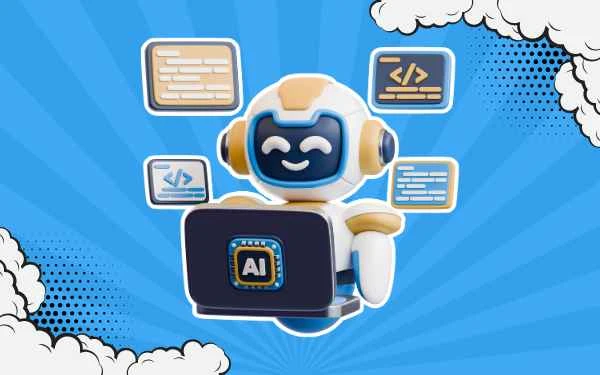




CodeBoxx Technology is taking orders for CrewKit Forge, an on-premises AI software development appliance designed to let enterprises run multiple AI-assisted engineering workflows inside their own facilities. The one-meter system combines compute, storage, networking, and the company’s CrewKit Forge operating system to coordinate local AI models and selected external inference services. CodeBoxx says the appliance can support workloads equivalent to as many as 20 AI-equipped software development professionals working in parallel, while keeping repository operations, builds, testing, and code review on premises. The product targets organizations seeking greater control over software development data, AI infrastructure, and recurring model-inference costs.
CodeBoxx Puts AI Software Development on Enterprise-Owned Hardware
CodeBoxx is positioning CrewKit Forge as an alternative to cloud-dependent AI coding services: a physical appliance that organizations purchase, install, and operate within their own facilities. Rather than selling access to another hosted development platform, the company packages AI inference infrastructure, software orchestration, and deployment support into a single system.
The product is built around CrewKit Forge OS, which coordinates AI agents across software delivery activities including product development, system architecture, design, testing, cybersecurity, monitoring, compliance, and documentation. CodeBoxx says the appliance can manage up to 20 governed software workstreams in parallel, describing the capacity as equivalent to workloads handled by 20 AI-equipped software professionals. That comparison is a company claim; the announcement does not provide independent throughput benchmarks or a standardized workload test.
The reference configuration listed on CodeBoxx’s product website includes an AMD Threadripper PRO 9995WX processor with 96 cores and 192 threads, an NVIDIA RTX PRO 6000 Blackwell GPU with 96GB of video memory, 1TB of system RAM, and 12.8TB of Gen5 NVMe storage. The hardware is housed in a one-cubic-meter enclosure with five integrated touch displays. CodeBoxx says specifications may change as units are prepared for delivery.
Local-First AI With Controlled Cloud Escalation
Data control is central to the product’s positioning. Repository operations, code scaffolding, software builds, testing, code review, and monitoring are designed to run locally. The system can coordinate inference across local models and private open-weight models, while routing selected tasks to external frontier models when greater reasoning capacity or longer context windows are needed.
That hybrid approach is important because an on-premises AI appliance does not automatically eliminate cloud dependencies. CodeBoxx says CrewKit uses a managed inference gateway to escalate selected jobs to its private AI Cloud and records those decisions. The company says code and data do not leave the premises without a recorded decision.
For organizations working with proprietary source code, regulated information, or internal software systems, this offers a different governance model from sending development tasks directly to third-party cloud AI services. However, enterprises will still need to examine the gateway’s access controls, logging, retention policies, model-provider arrangements, and configuration options before determining whether the system meets their security and compliance requirements.
CodeBoxx also emphasizes that people remain responsible for requirements, product direction, architecture decisions, and final judgment. The agents are intended to coordinate execution rather than independently determine what a business should build.
An Appliance Model for AI-Native Engineering
CrewKit Forge’s physical design is part of its commercial proposition. The appliance can be installed in an office or boardroom rather than requiring a conventional server-room deployment. An optional rolling Power Core Table adds power conditioning, an uninterruptible power supply, and batteries.
The system also includes five touch displays intended to give managers visibility into active workstreams and system performance. CodeBoxx is effectively selling more than computing hardware: the offering combines the appliance, its software control plane, three years of White-Glove service, and employee onboarding through CodeBoxx Academy.
This packaging reflects a growing enterprise interest in controlling AI infrastructure and inference costs. Cloud-based coding assistants offer rapid access to advanced models without requiring companies to manage their own hardware, but they can introduce recurring usage charges and questions about where source code is processed. An owned appliance offers greater infrastructure control, although customers must also account for hardware acquisition, electricity, maintenance, model updates, and ongoing support.
CodeBoxx Uses Its Own Delivery Work as Evidence
The company says CrewKit Forge evolved from an AI-native software delivery operation that CodeBoxx developed internally. Across seven client platforms, CodeBoxx estimates its approach saved approximately $14.9 million compared with traditional development teams using 2022 cost assumptions.
In four benchmark studies, the company reports average delivery that was 5.2 times faster and 78% cheaper. Its published methodology distinguishes actual billed amounts and delivery records from estimated traditional-team costs and timelines. The comparisons therefore represent CodeBoxx’s own assessment rather than independently audited evidence that the appliance will produce equivalent savings for other customers.
That distinction matters for prospective buyers. Software delivery outcomes depend on project complexity, requirements, integration work, code quality, security reviews, and the level of human supervision. The company’s internal results provide a starting point for evaluating the model, but customers will need their own pilots to establish productivity and cost benefits.
Quantum Gateway and Commercial Availability
CodeBoxx is also offering an optional quantum gateway. It is designed to let developers prepare, simulate, and rehearse quantum algorithms locally before transferring suitable workloads to actual quantum computing hardware. This is a development and simulation pathway, not an indication that CrewKit Forge contains a quantum processor.
The company is taking orders in the United States and Canada. Customers can place a fully refundable $2,500 deposit to reserve a configuration and deployment position, with payment or financing options available when the appliance is delivered. Each installation includes three years of service and onboarding. CodeBoxx has not published a complete appliance purchase price or detailed delivery schedule in the announcement.
CrewKit Forge enters a market where enterprises are weighing the convenience of hosted AI coding tools against the control offered by private infrastructure. Its differentiation is the combination of locally executed software workflows, model orchestration, managed cloud escalation, and an owned hardware platform.
Whether that model gains traction will depend on its total cost of ownership, performance against established AI development tools, and the quality of governance controls. CodeBoxx is making a substantial proposition: that companies can bring much of their AI-assisted software production inside their own buildings. The next important evidence will come from customer deployments and independently reproducible performance results.
Market Landscape
Enterprise AI software development is moving toward a mix of cloud-hosted coding assistants, private model deployments, and locally managed inference infrastructure.
CrewKit Forge targets organizations that want to:
- Keep source code and routine development workloads on premises.
- Coordinate multiple AI agents across software engineering disciplines.
- Control model selection and external inference requests.
- Reduce dependence on usage-based cloud AI pricing.
- Maintain greater visibility over development workflows and governance.
Its competitive context includes cloud-based AI coding environments such as GitHub Copilot, Cursor, and Claude Code, alongside enterprise self-hosted model infrastructure. These offerings are not direct hardware equivalents, but they compete for enterprise AI development budgets.
The central buying decision is whether the control and potential cost predictability of owned infrastructure outweigh the flexibility and lower upfront commitment of cloud-based tools.
Top Insights
- CrewKit Forge packages AI-assisted software development into an enterprise-owned, one-cubic-meter appliance designed for on-premises installation.
- Its reference configuration combines AMD Threadripper PRO processing, NVIDIA Blackwell GPU hardware, 1TB RAM, and 12.8TB NVMe storage.
- Local execution is the default, while selected frontier-model requests can be routed through a managed cloud inference gateway.
- CodeBoxx reports 5.2-times-faster delivery and 78% lower costs across four internal benchmark studies; these comparisons are company estimates.
- The optional quantum gateway supports algorithm development and simulation, not execution on quantum hardware inside the appliance.
Power Tomorrow’s Intelligence — Build It with TechEdgeAI