







AI tutoring products have largely focused on giving students fast answers, but Aristotle is taking a different approach: building an AI system designed around the teaching process itself. The voice-first tutoring platform has raised $5 million in seed funding, led by True Ventures, following a closed beta in which more than 1,000 students completed over 1,500 hours of one-on-one tutoring.
Generative AI has made it remarkably easy for students to get an answer to a homework question. The harder problem is making sure they actually understand why the answer is correct.
That distinction is at the center of Aristotle, a voice-first AI tutoring company founded by three Stanford alumni with backgrounds in human tutoring and AI research.
The company has raised $5 million in seed funding, led by True Ventures, with participation from Wicklow Capital and angel investors associated with Anthropic, OpenAI, Sierra, Ramp, Cognition and other technology companies.
Aristotle is launching nationally following a closed beta in which more than 1,000 students completed over 1,500 hours of one-on-one tutoring.
The company’s founders—Shan Reddy, Jaiden Reddy and Vivek Vajipey—came to the problem through years of conventional tutoring. Shan and Jaiden spent nearly a decade working with students through platforms including Wyzant and Varsity Tutors, while Vivek researched large language model reasoning at Stanford’s Computation and Cognition Lab.
Their experience led them to a limitation they believe is common among general-purpose LLMs: an AI system can be optimized to solve a student’s immediate problem without necessarily helping the student develop the ability to solve the next one independently.
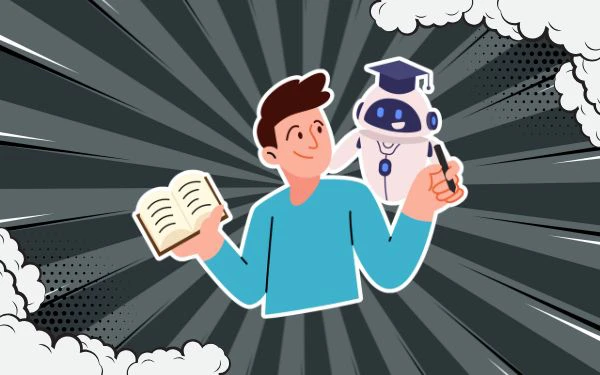
Aristotle is therefore designed around a different interaction model. Rather than functioning primarily as a text chatbot, it uses voice-based conversations intended to resemble a one-on-one tutoring session.
The platform is designed to remember previous sessions, adapt interactions to individual students and determine when to provide assistance and when to allow students to continue working through a difficult concept.
That last capability is particularly relevant to AI tutoring. Effective tutoring is not simply the transfer of information. A teacher may deliberately avoid giving an answer, ask a simpler question, identify a misconception or give a student additional time to reason through a problem.
Aristotle’s product thesis is that an AI tutor needs to reproduce some of that adaptive behavior rather than optimizing exclusively for immediate task completion.
Voice is also an important part of the product architecture. A conversational interface can make tutoring more continuous than a sequence of typed prompts and responses, particularly for younger students. It also gives the system access to conversational signals that can be used to determine when a student is struggling or when an explanation needs to change.
The company is entering an increasingly crowded AI education market. General-purpose systems such as ChatGPT can already answer educational questions, while dedicated platforms are building AI capabilities around homework assistance, language learning, test preparation and personalized instruction.
The differentiation for dedicated tutoring systems therefore increasingly comes down to pedagogy, personalization and workflow rather than access to a foundation model alone.
Aristotle’s founders argue that the crucial distinction is keeping students in what they describe as the productive struggle between understanding and confusion. The system is intended to guide students through that space instead of immediately resolving the problem for them.
The company says its origins in human tutoring informed that product design. Its founders’ experience also reflects a broader trend in AI development: domain-specific products are increasingly attempting to encode expert workflows and interaction patterns on top of foundation-model capabilities.
For education providers and families, the potential benefit is scalability. Human tutoring can be highly personalized but is constrained by tutor availability and cost. AI systems can theoretically provide one-on-one interactions to a much larger number of students, provided the quality of instruction is sufficiently reliable.
The company cites an early customer example in which a parent said their 13-year-old preferred Aristotle to a human tutor costing $250 per hour. That is an individual customer account rather than evidence of comparative effectiveness across students.
The new funding will be used to expand Aristotle’s product, grow its team and support the company’s nationwide launch.
The larger technology question is whether AI tutoring can progress from answer generation to adaptive instruction. That requires more than a capable language model. It requires persistent student context, conversational memory, appropriate intervention strategies and mechanisms for deciding when not to provide an immediate answer.
Aristotle is betting that combining those capabilities with a voice-first interface can make AI tutoring resemble an ongoing educational relationship rather than another question-and-answer application.
Market Landscape
AI-powered education is moving from basic homework assistance toward personalized tutoring, conversational learning and adaptive instruction.
General-purpose foundation models provide the underlying reasoning and language capabilities for many educational applications, while specialized companies are building products around curriculum, student context, assessment and instructional workflows.
The central challenge is balancing personalization with accuracy and educational quality. An AI tutor must not only produce correct explanations but also recognize misconceptions, adjust difficulty and avoid creating dependency by solving every problem for the student.
Voice interfaces add another dimension by making AI tutoring more conversational and potentially more accessible to younger learners. However, long-term adoption will depend on measurable learning outcomes, safety, reliability and the ability to complement rather than simply automate educational support.
Top Insights
- Aristotle has raised $5 million to develop a voice-first AI tutoring platform designed around adaptive instruction rather than simple answer generation.
- The platform uses conversational memory to retain context from previous tutoring sessions and personalize future interactions.
- Its founders’ experience as human tutors influenced the product’s focus on productive struggle, guided reasoning and timely intervention.
- More than 1,000 students participated in the closed beta, completing over 1,500 hours of one-on-one AI tutoring.
- The company enters a competitive education-AI market where differentiation increasingly depends on pedagogy, personalization and measurable learning outcomes.
Power Tomorrow’s Intelligence — Build It with TechEdgeAI