







WisPaper, the Singapore‑based AI‑powered research agent, announced a new platform that promises to shift scientific work from routine execution toward higher‑level judgment and strategy. By automating literature review, experiment configuration, code generation, and data orchestration, the service aims to let researchers—and the enterprise marketing teams that rely on their insights—spend more time defining problems, interpreting results, and charting the next steps of innovation.
From Execution to Decision‑Making
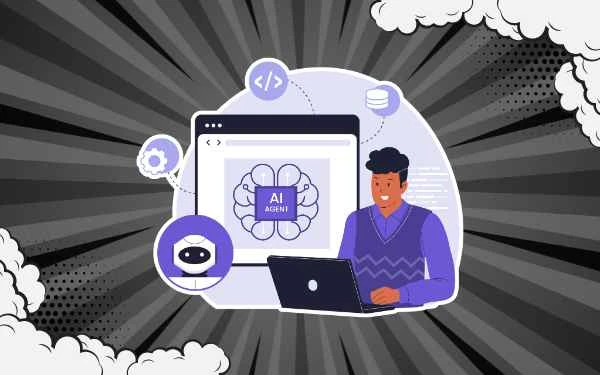
For decades, researchers have shouldered every stage of the discovery pipeline: scouring papers, setting up labs, writing code, running analyses, and finally drafting reports. WisPaper’s new platform flips that model on its head. Leveraging large language models (LLMs) and generative AI, the system can ingest thousands of papers, extract key findings, draft experimental protocols, generate and debug code, and even format results into structured outputs. The human user then reviews the AI‑produced artifacts, validates conclusions, and decides where to steer the project next.
Why the Shift Matters
The change is more than a productivity tweak. Gartner estimates that AI‑driven automation will unlock $4.1 trillion of business value by 2027, with a sizable share coming from research and development. IDC predicts a 30 % year‑over‑year increase in AI adoption for R&D across enterprises. By removing the “busy work” of data wrangling and routine coding, WisPaper frees up scarce scientific talent to focus on creativity, hypothesis generation, and strategic alignment—capabilities that remain uniquely human.
Industry Context and Competitive Landscape
WisPaper joins a crowded field of AI research assistants. Microsoft’s Azure OpenAI Service offers Copilot‑style code generation, while Google’s Vertex AI provides end‑to‑end ML pipelines. Amazon’s Bedrock and Anthropic’s Claude target similar use cases, but most competitors stop at code assistance or notebook orchestration. WisPaper differentiates itself by delivering a full‑stack workflow: from literature retrieval through experiment execution to manuscript drafting, all within a single UI. This holistic approach mirrors the integrated suites offered by Salesforce’s Einstein and Adobe’s Sensei for marketing analytics, but applied to scientific inquiry.
Implications for Enterprise Marketing Teams
Marketing departments increasingly depend on deep, data‑driven insights—whether to validate product‑market fit, assess competitive technology, or generate thought leadership content. WisPaper’s ability to synthesize the latest research and produce ready‑to‑publish reports can accelerate market intelligence cycles. Teams can ask the platform to “summarize emerging trends in generative AI for content creation” and receive a curated briefing, complete with citations and actionable recommendations. The shift from manual literature reviews to AI‑curated insights reduces time‑to‑decision, enabling faster go‑to‑market strategies and more agile campaign planning.
The enterprise marketing shift also means that research outputs can be directly aligned with brand storytelling and demand generation, shortening the feedback loop between scientific discovery and market messaging.
Technical Foundations
At its core, WisPaper runs on a hybrid LLM stack that blends proprietary fine‑tuned models with OpenAI’s GPT‑4 and Google’s PaLM for specialized tasks. The platform’s execution layer is containerized on Kubernetes, allowing it to spin up GPU‑accelerated pods for code compilation and data processing on demand. Integration points include REST APIs for enterprise data lakes, S3‑compatible storage, and direct connectors to cloud AI services from Azure, Google Cloud, and AWS.
Potential Challenges
Automation does not eliminate the need for domain expertise. Validation of AI‑generated experiments remains a critical bottleneck, especially in regulated industries such as pharmaceuticals and finance. Moreover, data provenance and model bias are ongoing concerns; enterprises must implement governance frameworks to audit AI outputs.
The Road Ahead
WisPaper plans to roll out collaborative features that let multiple researchers co‑author AI‑generated drafts in real time, echoing the collaborative editing experience of Google Docs. A roadmap also includes “decision‑support dashboards” that surface risk assessments and ROI projections for proposed research directions—tools that could become as indispensable to R&D managers as Tableau is to business analysts today.
Market Landscape
The AI research assistant market is evolving from niche tooling to enterprise‑grade platforms. According to Forrester, 57 % of large enterprises will embed AI‑driven knowledge extraction into their core workflows by 2028. Cloud providers are extending their AI portfolios: Microsoft’s Azure AI, Google Cloud’s Vertex AI, and Amazon Bedrock each offer managed services that can be stitched into research pipelines. Meanwhile, specialized startups like LabTwin, BenchSci, and DeepMatter focus on domain‑specific automation (e.g., lab notebook digitization or chemistry synthesis planning). WisPaper’s broad‑scope approach positions it as a potential integrator, bridging generic AI capabilities with vertical expertise.
Top Insights
- Execution automation frees talent – By handling literature mining, code generation, and data wrangling, AI research agents let scientists focus on hypothesis crafting and strategic decision‑making.
- Enterprise marketing gains speed – AI‑curated research briefs accelerate market intelligence, shortening the cycle from insight to campaign launch.
- Holistic workflow is a differentiator – Unlike point solutions, WisPaper’s end‑to‑end platform reduces tool fragmentation and lowers integration overhead.
- Governance remains essential – Validation, bias monitoring, and data provenance are non‑negotiable for regulated sectors adopting AI research tools.
- Competitive pressure is rising – Cloud giants and niche startups are converging on similar capabilities, making product differentiation and ecosystem partnerships critical.