








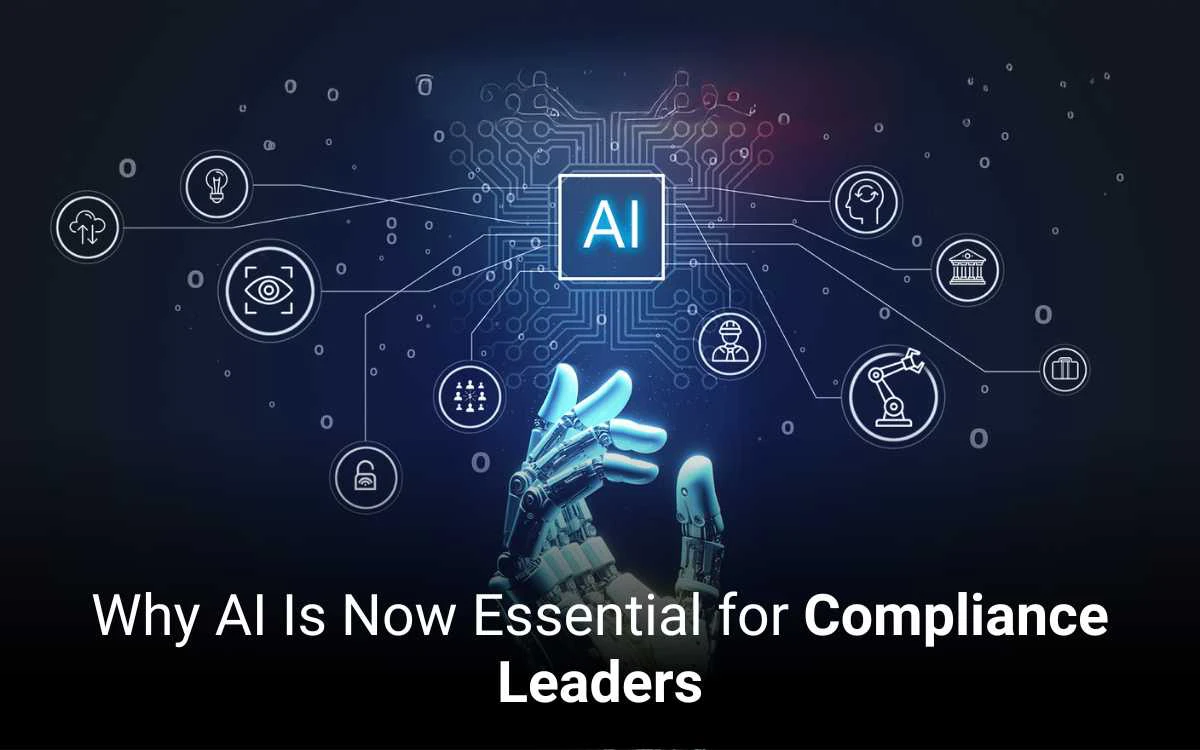
A compliance leader at a bank reviews transactions flagged for potential fraud. The clock is ticking, and the compliance team is overwhelmed by unstructured data. In this scenario, human effort falls short, and AI Compliance steps in as a game-changer. AI tools analyze patterns in real-time and find hidden risks. For example, instead of manually checking financial records, AI can detect anomalies, cross-reference them with historical cases, and flag risks for review.
The impact of AI Compliance extends beyond speed. Natural language processing can scan contracts for compliance gaps, ML can predict high-risk customer behavior, and automated monitoring systems can keep track of new regulations.
This article will discuss the need for AI for Compliance.
AI-driven Compliance: A New Standard for Risk Management
1. Why Traditional Compliance is no Longer Able to Keep Up with Modern Risk
The needs of regulatory compliance are growing, and business activities are becoming increasingly digital. Traditional compliance methods are not able to keep up with real-time risk. For companies operating across multiple regions and regulations, this is a problem. AI-based compliance changes the nature of risk management from an audit process to a continuous monitoring process.
2. From Periodic Checks to Continuous Monitoring
AI systems are able to monitor transactions, behaviors, and processes in real-time, pointing out anomalies as they happen.
Example: A FinTech business uses AI to monitor transactions for AML risks, pointing out anomalies real-time rather than at the end of the month.
3. Improving Audit Readiness and Transparency
The compliance platforms that use AI are transparent and auditable. This makes them audit-ready and helps to establish trust with regulators and customers.
4. Reacting to Regulatory Change Quickly
Regulatory changes can be applied to AI models, which helps to close the gap between regulatory changes and enforcement.
5. Integrating Compliance with Business Operations
Compliance is no longer an afterthought but is instead integrated with business operations.
How AI Helps Compliance Leaders Prepare for Audits
AI shifts audit preparation from reactive defense to continuous confidence.
1. From Scramble to Readiness: The Shift in Audit Preparation
The traditional method of audit preparation involves weeks of preparation before an audit, where the compliance team has to gather documents, reconcile data, and answer queries. AI changes this by allowing the compliance team to be in a state of continuous readiness for audits. Rather than preparing for audits, the compliance team is always as if audits are imminent.
2. Evidence Collection and Documentation
Evidence collection is one of the most labor-intensive aspects of audits. AI-powered compliance platforms enable the automatic collection of data from systems in the form of logs, policy acknowledgments, transactions, and control evidence.
Example: A SaaS company uses AI to compile access logs and control evidence for SOC 2 audits, cutting preparation time.
3. Early Identification of Compliance Gaps
AI is constantly on the lookout for any type of deviation in policy or control. Once issues are identified, they can be easily remedied before auditors flag them as exceptions.
Example: A fintech company identifies the absence of KYC documents in real-time and remedies the issue before receiving audit exceptions.
4. Offering Explainable and Audit-ready Insights
There is an increasing trend among auditors for more transparency in AI decision-making. AI is capable of offering explanations and audit trails for identified risks or taken actions.
AI and Compliance: What Happens If You Don’t Adopt It
Not adopting AI in compliance doesn’t preserve the status quo, it increases risk.
1. Risks of Non-compliance Exceed the Capacity of Manual Processing
The requirement for regulatory compliance in data privacy, security, financial reporting, and AI governance itself is increasing. Organizations that are manually compliant will find it difficult to keep up. Without AI, risk identification will be less synchronized.
Example: A services firm that is manually tracking its compliance in spreadsheets overlooks an update in one region and faces fines and delays in market entry.
2. Risks of Audit Findings and Penalties
Auditors require continuous monitoring, traceability, and explainability. Organizations that are not using AI-driven compliance systems are left to conduct point-in-time analysis, which increases the risk of control gaps.
Example: A SaaS firm is unable to provide timely evidence of security compliance during an audit and faces remediation steps and loss of customer trust.
3. Rising Operational Costs and Compliance Burnout
Manual compliance scales linearly with complexity. As regulations and transactions grow, so does headcount and workload. AI automates repetitive tasks, while non-adopters face rising costs and employee burnout.
4. Loss of Customer’s Trust
Customers evaluate vendors on compliance maturity. Companies without AI-driven compliance struggle to demonstrate proactive governance, impacting deals.
Conclusion
The importance of AI in compliance extends beyond merely avoiding penalties. It is about building trust with regulators, protecting the organization’s reputation, and creating resilience for the future. One who keeps pace with regulatory expectations will position compliance as a value driver. Begin exploring AI Compliance solutions, evaluate how AI tools can strengthen your governance framework, and take the first step toward building a more intelligent compliance function.