



Data center maintenance has long followed a familiar pattern: fixed service schedules, reactive repairs, and manual inspections that assume equipment behaves the same way today as it did last quarter. As AI workloads push infrastructure harder and closer to its limits, that model is starting to crack.
Vertiv thinks it’s time to retire it.
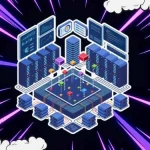
The company announced the launch of Vertiv™ Next Predict, an AI-powered managed service designed to shift data center operations from time-based maintenance to predictive, condition-driven intelligence. The service continuously analyzes infrastructure behavior across power, cooling, and IT systems to identify risks before they turn into outages—effectively turning maintenance into a data science problem.
It’s the latest addition to Vertiv’s growing AI infrastructure portfolio and a signal of how operational priorities are changing as AI reshapes data center design.
Why Predictive Maintenance Is Becoming Non-Negotiable
AI workloads are fundamentally different from traditional enterprise computing. They’re denser, more power-hungry, and far less tolerant of downtime or thermal variability. As a result, operators need deeper visibility into infrastructure health—not just alarms after something breaks, but insight into why it might break next.
Vertiv Next Predict is built around that premise. Instead of relying on static thresholds or maintenance calendars, the service uses AI-based anomaly detection to establish normal operating behavior for individual assets. When conditions drift—even subtly—the system flags deviations early.
Those signals feed into a predictive algorithm that assesses potential operational impact, prioritizes risk, and determines where intervention will matter most. From there, automated root cause analysis isolates contributing factors, allowing for targeted, prescriptive responses rather than broad, manual troubleshooting.
The goal is straightforward: prevent incidents instead of reacting to them.
From Assumptions to Evidence-Based Operations
According to Ryan Jarvis, vice president of Vertiv’s global services business unit, the shift is as much cultural as technical.
Traditional maintenance assumes equipment degrades on a predictable schedule. AI-driven infrastructure doesn’t.
As compute intensity rises and architectures evolve—especially with liquid cooling and high-density power delivery—operators can no longer afford to rely on assumptions. Continuous condition monitoring replaces guesswork with evidence, enabling teams to mitigate risk before performance or uptime is affected.
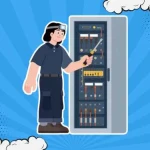
Vertiv Next Predict closes the loop by carrying prescriptive actions through to execution, with corrective measures performed by Vertiv-trained service personnel. That integration between analytics and on-the-ground service is a key differentiator in a market where many predictive tools stop at alerts.
Designed for AI-Era Infrastructure
Vertiv engineered Next Predict to support a wide range of current platforms, including power systems, cooling infrastructure, battery energy storage systems (BESS), and liquid cooling components. That breadth matters as AI-driven data centers become more heterogeneous, mixing legacy assets with next-generation hardware.
More importantly, the service is designed to scale alongside future technologies as part of Vertiv’s grid-to-chip architecture. Rather than treating predictive maintenance as a point solution, Vertiv is positioning it as a foundational layer that spans the entire infrastructure stack.
That forward compatibility is a strategic move. Many data center operators are hesitant to adopt new operational platforms if they risk becoming obsolete as designs evolve. Vertiv is betting that predictive intelligence will only become more central as AI pushes facilities toward higher density and tighter tolerances.
Competitive Context: Operations Are the New Battleground
The data center industry has spent the last decade focused on capacity—more racks, more power, more cooling. As AI accelerates that buildout, operational resilience is emerging as the next differentiator.
Hyperscalers and colocation providers alike are under pressure to maintain uptime while managing increasingly complex environments. Predictive maintenance, once a “nice to have,” is becoming a requirement.
Vertiv’s advantage lies in its combination of domain expertise and global service reach. While software-only vendors offer analytics platforms, few can pair AI-driven insight with trained technicians who can execute corrective actions at scale. That end-to-end model positions Vertiv not just as an equipment supplier, but as an operational partner.
A Broader Shift Toward AI-Managed Infrastructure
Vertiv Next Predict reflects a larger trend across critical infrastructure: the move toward AI-managed operations. Similar approaches are emerging in networking, energy management, and industrial systems, where continuous monitoring and automated decision-making outperform manual processes.
In data centers, the implications are significant. Predictive intelligence can reduce unplanned downtime, extend asset life, and optimize maintenance spend—all while supporting the extreme demands of AI workloads.
For operators navigating the transition to AI-first facilities, the message is clear: infrastructure may still be physical, but its management is becoming decisively digital.
And Vertiv is positioning Next Predict as a core piece of that future.
Power Tomorrow’s Intelligence — Build It with TechEdgeAI