









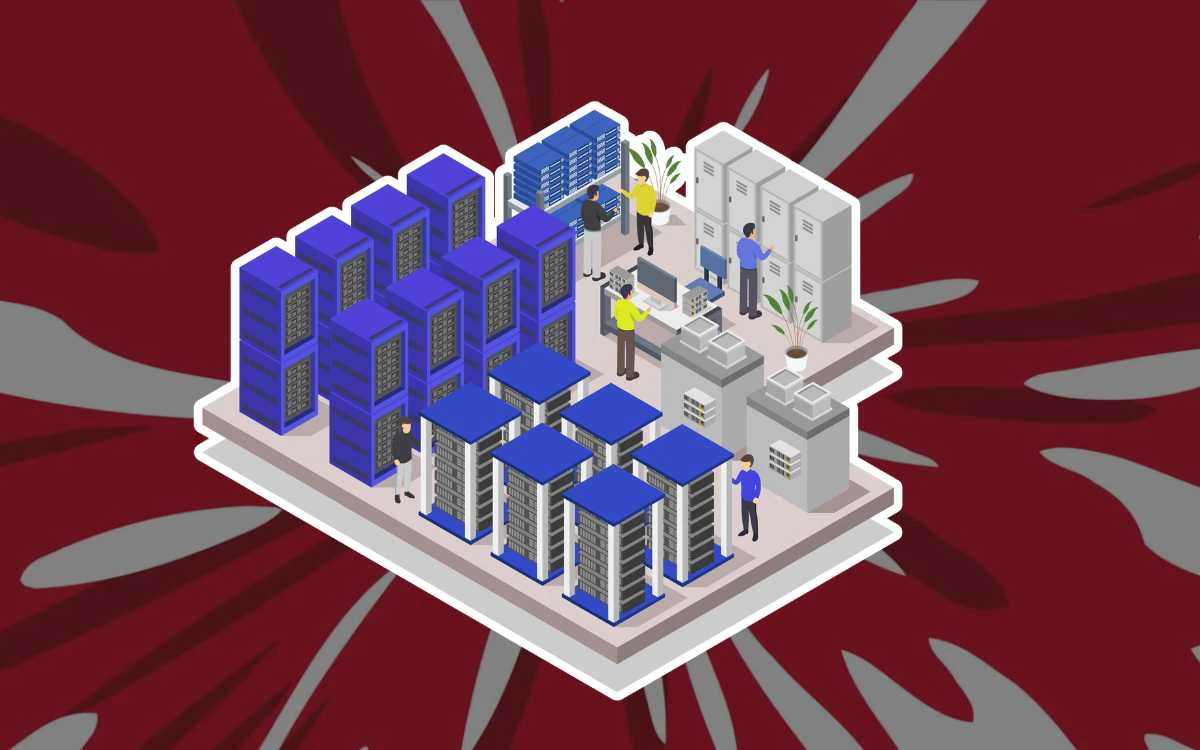
At the 2026 edition of the World AI Cannes Festival, French infrastructure player Policloud made its ambitions clear: it wants to become a sovereign, distributed alternative to hyperscale AI cloud—and it’s moving fast.
Just one year after unveiling its first project in Cannes, the company says it has completed eight installations across France, the Gulf Cooperation Council (GCC), and the United States in under six months. The result: €10.5 million in contracts and more than 1,200 GPUs already deployed.
That’s the opening act. The real headline is what comes next.
From Eight Installations to 100 in 2026
Policloud’s roadmap is aggressive even by AI-era standards. The company plans to bring 100 “Policlouds” online in 2026—amounting to more than 25,000 GPUs—and scale to 1,000 units by the end of 2030, representing over 250,000 GPUs.
In a market strained by compute shortages, export controls, and hyperscaler dominance, that’s not just growth—it’s a positioning play.
While US giants continue to centralize AI capacity in mega data centers, Policloud is betting on a distributed model: modular, high-performance computing (HPC) units deployed close to where demand and energy capacity already exist.
The pitch? Sovereign AI infrastructure that doesn’t require waiting years for a hyperscale facility to be built—or for grid upgrades to be approved.
Distributed AI Infrastructure, Not Mega Data Centers
Policloud’s units are designed to operate on existing electrical grids and tap into renewable or underutilized energy sources. That design aims to sidestep some of the most pressing bottlenecks in AI infrastructure today:
- Long construction timelines for traditional data centers
- Delays in securing high-capacity grid connections
- Rising local opposition to large-scale facilities
- Mounting scrutiny over energy and water consumption
By deploying modular, distributed nodes, Policloud says it can accelerate time-to-market while reducing both costs and carbon footprint.
In practical terms, this model allows governments, energy operators, agricultural players, and industrial firms to host AI inference capacity locally—without handing control to overseas hyperscalers.
That sovereignty angle is not incidental.
A Sovereign Alternative to Hyperscalers
Europe and parts of the Gulf have increasingly voiced concerns about dependence on US-based cloud giants for critical AI workloads. Data sovereignty, governance, and strategic autonomy are now board-level and cabinet-level discussions.
Policloud is positioning itself squarely within that geopolitical shift.
Its infrastructure is locally governed, high-performance, and designed for AI inference—a segment of the AI stack that’s exploding as enterprises move from model training to real-world deployment.
Training large foundation models still requires massive centralized clusters. But inference—the process of running those models in production—can be distributed closer to end users. That’s where Policloud sees opportunity.
And with global demand for AI inference capacity rising sharply, compute availability is becoming as strategic as energy supply.
1,200 GPUs Deployed—And Counting
The company’s initial traction spans three continents, with projects finalized or underway in:
- France
- The United Arab Emirates
- Texas
By securing €10.5 million in contracts and deploying over 1,200 GPUs in less than six months, Policloud has demonstrated that demand exists for its distributed approach.
While 1,200 GPUs is modest compared to hyperscale clusters boasting tens of thousands per site, the significance lies in distribution and governance rather than raw central density.
If Policloud hits its 2026 target of 25,000 GPUs and 2030 target of 250,000 GPUs, it would emerge as a meaningful mid-tier AI infrastructure player—especially in markets seeking alternatives to centralized US or Chinese cloud ecosystems.
Energy Constraints Are the Real Battleground
The AI infrastructure race is no longer just about silicon. It’s about power.
Across Europe and North America, utilities are struggling to accommodate the surge in demand from AI data centers. Grid upgrades can take years. Permitting can take longer. Local opposition—over land use, noise, and energy consumption—is intensifying.
Policloud’s model explicitly addresses this friction. By leveraging available, renewable, or untapped energy sources already present on existing grids, the company claims it can avoid structural bottlenecks tied to traditional facilities.
That’s a compelling narrative in regions where policymakers are trying to balance digital transformation with climate targets.
It also aligns with a broader industry trend: modular data infrastructure. From edge computing to micro data centers, smaller, distributed units are gaining traction as complements—or counterweights—to hyperscale campuses.
Why AI Inference Is the Sweet Spot
Much of the public AI conversation revolves around training frontier models. But inference is where monetization happens.
As enterprises integrate AI into manufacturing lines, energy optimization systems, logistics networks, and public services, inference workloads must run reliably and often locally.
Latency, data governance, and compliance requirements can make centralized hyperscaler deployments less appealing—especially in regulated industries.
By focusing on high-performance, distributed inference capacity, Policloud is targeting the operational layer of AI adoption rather than the research frontier.
That could prove to be a pragmatic move.
A French Player With Global Ambitions
Policloud’s expansion into the GCC and the United States—particularly Texas—signals that it isn’t content to remain a European niche provider.
Texas, with its deregulated energy market and fast-growing data center ecosystem, represents one of the most competitive AI infrastructure regions globally. Meanwhile, the Gulf states are aggressively investing in sovereign AI capabilities as part of broader economic diversification strategies.
If Policloud can secure footholds in both regions while scaling in Europe, it could carve out a distinct lane: distributed, energy-optimized, sovereign AI infrastructure for governments and industrial enterprises.
The Road to 250,000 GPUs
Ambition, of course, is easier to announce than to execute.
Scaling from eight installations and 1,200 GPUs to 1,000 distributed units and 250,000 GPUs by 2030 will require:
- Substantial capital
- Reliable access to advanced GPUs amid global supply constraints
- Strong partnerships with energy providers
- Continued demand from sovereign and industrial clients
Still, in a world grappling with compute scarcity and energy constraints, Policloud’s distributed model taps into two powerful currents: sovereignty and sustainability.
At WAICF 2026, the message was clear. AI infrastructure is becoming geopolitical infrastructure. And Policloud wants to ensure that not all of it lives in hyperscale campuses owned by a handful of global giants.
Whether it can scale fast enough to matter at global scale remains to be seen. But in a market defined by bottlenecks—compute, power, and control—its timing may be exactly right.
Power Tomorrow’s Intelligence — Build It with TechEdgeAI