








Why the appointment matters
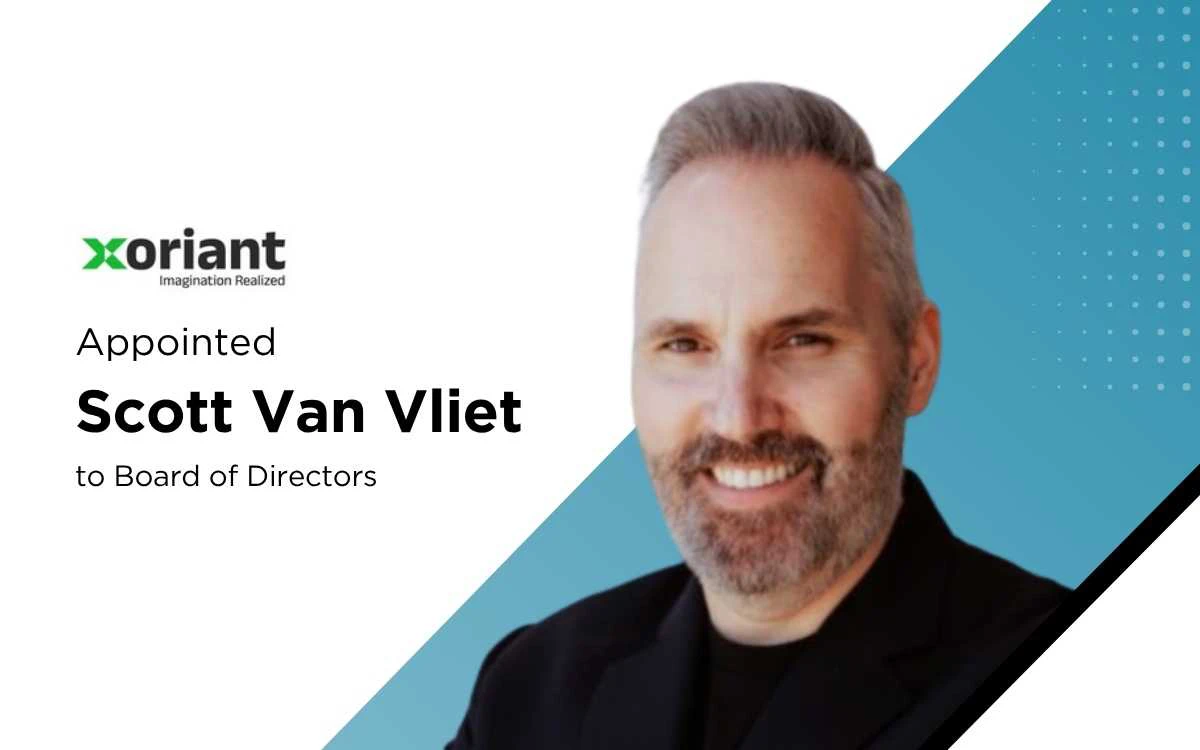
Xoriant’s board addition is more than a symbolic nod to AI expertise; it places a leader who has overseen the infrastructure that powers Microsoft’s most widely used generative‑AI services directly into the company’s strategic decision‑making. Van Vliet’s portfolio includes the model‑training and inference layers that support Azure Foundry Models, a core component of the public cloud’s AI offering. His presence is likely to shape Xoriant’s roadmap for scaling AI workloads, tightening integration with Azure services, and delivering production‑grade, agentic solutions to enterprise customers.
Van Vliet’s track record
Over the past two decades, Van Vliet has guided technology platforms that serve hundreds of millions of users. At Microsoft, he led engineering and product teams of roughly 1,500 people for Microsoft Teams and Azure Communication Services before transitioning to AI‑focused initiatives. In his current role, he supervises the engineering of Azure OpenAI and the underlying AI infrastructure—essentially the plumbing that allows large language models (LLMs) to be trained, fine‑tuned, and served at scale.
Before Microsoft, Van Vliet held senior positions at Relativity Space (SVP of Software Engineering, where he built the Factory Operating System), Amazon (General Manager), and Mattel (VP of Digital Play). This blend of consumer‑scale platform experience and enterprise‑level AI infrastructure gives him a rare perspective on how to turn experimental AI projects into reliable, revenue‑generating services.
Xoriant’s strategic direction
“Scott has lived at the intersection of deep AI engineering and large‑scale technology services, with the credibility of building future‑forward companies,” said Sanjay Jalona, Chairman of the Board and Operating Partner at ChrysCapital. “His combination of platform depth, product intuition, and engineering leadership makes him an extraordinary addition to our Board.” Jalona added that Van Vliet’s guidance will help Xoriant “transform how we build, deliver and help global enterprises navigate their AI transformation, turning applied intelligence to measurable impact.”
CEO Rohit Kedia echoed the sentiment, noting that enterprises are moving from AI pilots to “production‑grade, agentic systems that must be reliable, scalable, and deeply integrated with operations.” Kedia emphasized that Van Vliet’s experience with the infrastructure behind Azure OpenAI will sharpen Xoriant’s Applied Intelligence capabilities and accelerate the rollout of ORIAN AI Studio.
ORIAN AI Studio in action
Xoriant’s ORIAN AI Studio, a low‑code platform for building agentic AI applications, is already delivering quantifiable results. Early deployments have cut document‑processing times from hours to minutes while boosting throughput by 80 % and achieving 97 % accuracy. In software development, the same platform has reduced lifecycle timelines from multi‑quarter projects to under a month, slashing effort by roughly 50 % without sacrificing quality.
The company recently integrated TestDevLab, a suite focused on AI model validation, fairness testing, and safety evaluations. This addition expands ORIAN’s capabilities beyond model building to encompass the full MLOps lifecycle—an increasingly important requirement as regulators and enterprise risk teams scrutinize AI deployments.
Industry context
The announcement arrives amid a broader shift in the enterprise AI market. While many vendors still focus on offering standalone LLMs or generative‑AI APIs, a growing segment is targeting “agentic” AI—systems that can plan, act, and adapt autonomously within business processes. Building such agents requires robust infrastructure, continuous monitoring, and tight integration with existing data and workflow platforms.
Microsoft’s Azure OpenAI service has become a de‑facto standard for enterprises looking to embed large‑scale language models without managing the underlying hardware. Van Vliet’s role in that ecosystem positions Xoriant to leverage Azure’s compute and networking efficiencies, potentially lowering the total cost of ownership for its clients. Moreover, his background in scaling communication platforms like Teams suggests an ability to address latency and reliability challenges that have historically hampered real‑time AI applications.
What this means for developers and enterprises
For developers, the board appointment signals that Xoriant may deepen its partnership with Azure, offering tighter integration with Azure OpenAI endpoints and possibly pre‑built connectors for data sources such as Microsoft Dynamics, Power Platform, and Azure Data Lake. This could reduce the engineering effort required to move from prototype to production.
Enterprises stand to benefit from faster time‑to‑value on AI initiatives. The documented 80 % throughput improvement and 50 % effort reduction indicate that Xoriant’s platform can help organizations avoid the typical “AI hype cycle” pitfalls—prolonged PoC phases and under‑delivered ROI. The addition of TestDevLab also addresses growing compliance concerns, giving risk and legal teams more confidence in deploying autonomous agents at scale.
Looking ahead
Xoriant’s next steps will likely involve scaling ORIAN AI Studio’s agentic capabilities across more industry verticals, from financial services to manufacturing. With Van Vliet’s expertise in AI core infrastructure, the company may also explore custom accelerator support, hybrid‑cloud deployments, and tighter SLAs for mission‑critical AI workloads.
The appointment underscores a broader trend: AI‑centric companies are seeking board members who can bridge deep technical knowledge with enterprise execution. As the AI market matures, such cross‑functional leadership could become a differentiator for firms aiming to move beyond point solutions toward integrated, enterprise‑wide intelligence.