

Australia just gained a heavyweight contender in the global AI infrastructure race.
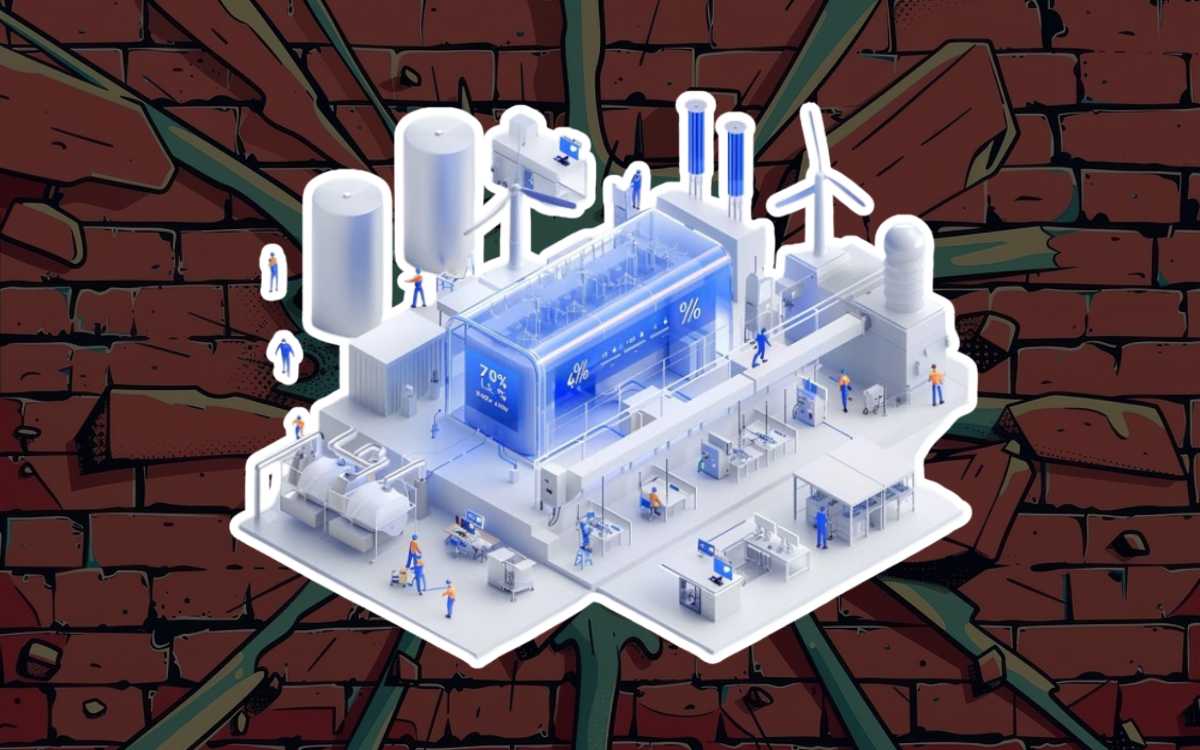
Cisco, SharonAI Holdings Inc., and NVIDIA have launched what they’re calling Australia’s first Cisco Secure AI Factory—a sovereign, high-performance AI infrastructure stack designed to keep data and AI processing entirely within the country.
The goal: give enterprises and government agencies access to hyperscale-grade AI compute without exporting sensitive data offshore.
Sovereign AI, Built for Scale
At the heart of the deployment are 1,024 NVIDIA Blackwell Ultra GPUs—a next-generation GPU platform engineered for large-scale AI model training and inference. A cluster of that size puts the facility squarely in serious high-performance compute (HPC) territory, capable of supporting foundation model development, advanced machine learning pipelines, and enterprise-scale generative AI workloads.
This isn’t just about raw compute. The Secure AI Factory integrates:
- Cisco UCS servers and its broader security and networking portfolio
- Nexus Hyperfabric under the Nexus One unified management plane
- High-performance storage from VAST Data
- Sovereign hosting in Australian data centers operated by NEXTDC
Together, the stack is designed to deliver end-to-end AI infrastructure: compute, storage, networking, and security—pre-integrated and optimized for enterprise and public sector use.
Why It Matters: Data Sovereignty Meets AI Acceleration
As countries sharpen policies around data sovereignty and AI governance, infrastructure location is becoming a strategic variable. Australia’s National AI Plan emphasizes responsible AI development, domestic capability, and stronger digital resilience. Keeping both data and model processing onshore aligns directly with those priorities.
For regulated industries—financial services, healthcare, defense, and government—sovereign AI infrastructure removes a common barrier to AI adoption: concerns over cross-border data movement and jurisdictional exposure.
In that sense, the Secure AI Factory reflects a broader global trend. Nations are increasingly seeking “national AI stacks” rather than relying entirely on offshore hyperscalers. Europe, parts of Asia, and the Middle East are making similar moves to localize AI compute capacity.
The Rise of the Neocloud
Sharon AI, described as a leading Australian neocloud, is positioning itself as a regional alternative to global hyperscalers. Instead of building generic cloud capacity, neocloud providers typically specialize in GPU-dense infrastructure optimized for AI and HPC workloads.
By partnering with Cisco and NVIDIA, Sharon AI gains enterprise-grade networking, integrated security, and direct access to one of the industry’s most advanced GPU architectures. Customers will also have access to sandbox environments for proof-of-concept experimentation—an important feature as organizations test generative AI use cases before full production deployment.
The 1,024-GPU Blackwell Ultra cluster also signals serious ambition. GPU supply constraints have been a limiting factor for AI growth worldwide. Securing and deploying a cluster at this scale suggests strong demand forecasts across Australia and the broader Asia-Pacific region.
A Competitive Shot Across the Bow
The launch positions Australia more competitively in attracting AI-driven investment and research. Enterprises that previously relied on offshore compute—often in the U.S. or Singapore—may now find equivalent performance domestically.
For Cisco, the initiative reinforces its strategy of embedding security and networking deeply into AI infrastructure rather than treating them as bolt-ons. As AI workloads become mission-critical, the argument for tightly integrated networking, zero-trust segmentation, and policy-driven controls grows stronger.
For NVIDIA, it’s another flagship deployment of Blackwell Ultra GPUs in a sovereign AI context—further cementing its dominance in AI silicon as governments and enterprises race to secure next-gen compute.
What Comes Next
Sharon AI’s leadership has already signaled plans for additional clusters in 2026 and beyond, suggesting this may be the first phase of a broader AI infrastructure rollout across Asia-Pacific.
If successful, the Secure AI Factory model could serve as a template for other mid-sized economies seeking to balance hyperscale performance with sovereign control.
In the global AI race, compute is power. With a 1,024-GPU Blackwell Ultra deployment now live onshore, Australia just strengthened its hand.
Power Tomorrow’s Intelligence — Build It with TechEdgeAI