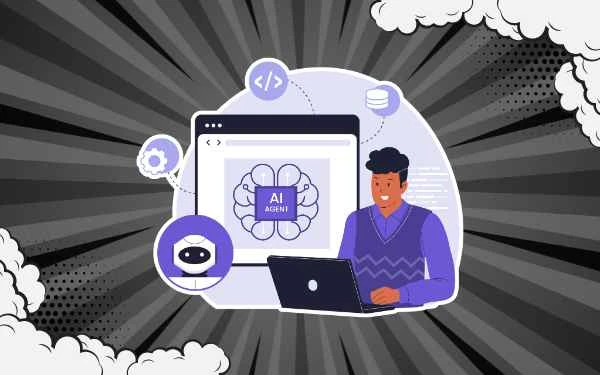









As AI accelerates how software is written, tested, and shipped, one part of the development lifecycle is struggling to keep up: quality assurance. BotGauge AI, a US-headquartered startup focused on Autonomous Quality-Assurance-as-a-Service, believes the answer isn’t better tools—it’s replacing the QA model altogether.
The company today announced a $2 million funding round led by Surface Ventures (New York), with participation from IA Seed Ventures (Berkeley) and Saka Ventures (New York). The capital will be used to expand R&D, strengthen BotGauge’s autonomous QA agents, and scale operations across the US and other key markets.
BotGauge AI’s pitch is direct and increasingly resonant in modern engineering organizations: QA should operate at the same speed and autonomy as AI-native software development—or it becomes the bottleneck that quietly undermines velocity, reliability, and customer trust.
The QA Gap in AI-Native Development
AI-native development has dramatically increased software velocity. Code is now generated, iterated, and deployed at unprecedented speed. But QA systems—often manual, tool-heavy, and people-constrained—haven’t evolved at the same pace.
The result is a widening “quality gap.” Teams either slow down releases to maintain coverage or push forward and accept higher production risk, leading to defects, customer issues, and rising post-release costs.
BotGauge AI is built around the idea that this tradeoff is no longer acceptable. Closing the gap, the company argues, requires QA to become autonomous, self-scaling, and outcome-driven, rather than a collection of tools and test scripts managed by overextended teams.
QA as a Managed Autonomous Service
Unlike traditional QA platforms that sell tooling, BotGauge AI positions itself as a managed autonomous QA partner that owns software quality outcomes end to end.
Its platform is built on AI-powered agentic testing, where autonomous QA agents continuously:
- Identify what needs to be tested
- Generate and maintain test coverage
- Execute tests at scale across the QA lifecycle
These agents operate continuously, adapting as the codebase evolves, with validation and oversight from in-house QA domain experts. Engineering teams don’t manage test suites or coverage metrics. Instead, they focus on building features and fixing defects—while BotGauge takes responsibility for quality execution, coverage, and release reliability.
This “ownership” model is a sharp departure from conventional QA tooling, which often shifts operational burden onto already busy engineering teams.
Early Results Signal Market Demand
Early customer deployments suggest the approach is gaining traction. BotGauge AI reports results from customers including Sully.AI, OroLabs, Kitsa, and Ripple, showing:
- 80% faster testing coverage
- ~75% reduction in production bugs
- Up to 50% shorter release cycles without expanding QA teams
Those metrics directly target pain points facing mid-market and high-growth software companies, where QA often struggles to scale alongside rapid product development.
In a market crowded with test automation tools, these outcomes highlight a growing appetite for services that don’t just enable QA—but take accountability for it.
Founders With Deep QA and AI Roots
BotGauge AI was founded by Pramin Pradeep, Naresh Kumar Rajendran, Vivek Nair, and Sreepad Krishnan Mavila, a team with more than a decade of experience in AI-driven test automation and enterprise QA transformation.
Their background spans deep engineering, interdisciplinary problem-solving, and product-first execution—experience that informs BotGauge’s view of QA as core infrastructure, not a downstream checkpoint.
“We’re entering an era where AI redefines reliable, high-velocity software engineering,” said Pramin Pradeep, Co-founder and CEO of BotGauge AI.
“The real bottleneck today isn’t coding, it’s outdated QA that forces teams to trade speed for quality. Our autonomous agents own the quality lifecycle—test discovery, generation, maintenance, and execution—freeing engineers and experts to focus on innovation and customer impact.”
According to Pradeep, the new funding accelerates BotGauge’s broader vision: making autonomous QA the default foundation for ambitious software organizations.
Why Investors Are Paying Attention
From an investor perspective, autonomous QA sits at the intersection of two powerful trends: AI-native development and enterprise demand for reliability at scale.
“Building autonomous QA for a diverse customer base requires solving complex organizational and technical problems,” said Gyan Kapur, Co-Managing Partner at Surface Ventures. “The BotGauge AI team has the background, intellect, and discipline to solve these problems over time.”
Rather than chasing incremental automation gains, BotGauge is tackling a systemic issue—how quality assurance functions in an environment where software changes constantly and releases are continuous. That framing positions the company less as a tooling vendor and more as a foundational services layer.
Scaling Toward Enterprise Readiness
A significant portion of the $2 million round will be directed toward hiring across engineering, product, and AI. The goal is to move BotGauge AI from early adoption into a production-scale, enterprise-ready autonomous QA solution.
Over the next 12 to 24 months, the company plans to deepen its engineering capabilities and expand adoption among mid-market and high-growth software companies globally. Long term, BotGauge aims to establish autonomous QA as a standard layer of modern software development—one that scales automatically with velocity rather than constraining it.
The Bigger Picture: QA as Infrastructure
As AI reshapes how software is built, the weakest links in the development lifecycle are becoming increasingly visible. QA is one of them.
BotGauge AI’s approach reflects a broader shift in enterprise thinking: reliability can’t depend on manual processes in an autonomous world. Just as infrastructure, deployment, and observability have evolved into managed, always-on systems, QA may be heading in the same direction.
If BotGauge succeeds, autonomous quality assurance won’t be a competitive advantage—it will be table stakes for teams shipping fast, AI-native software with confidence.
Power Tomorrow’s Intelligence — Build It with TechEdgeAI