







1. Medical technology companies invest heavily in protecting their intellectual property. What led Openwater to take a different approach by making its code and designs open to the research and engineering community?
Medical device development is expensive and time-consuming, in part because companies and researchers often build proprietary hardware and software from scratch for each new application. We believe a better approach is to create a common technology foundation that researchers and developers can build upon, rather than repeatedly reinventing the same underlying engineering.
Our premise is that medical devices can work more like modern computing, with shared hardware and software supporting different applications. A smartphone doesn’t require separate hardware for navigation, messaging, and photography. We apply that same principle to our two systems. Open-Motion uses near-infrared light to measure blood-flow-related signals, and Open-LIFU uses low-intensity focused ultrasound to modulate tissue.
By making our core designs, source code, and supporting safety data openly available, we give researchers and developers an established technical foundation they can adapt to their needs. Each application still requires appropriate testing and regulatory review, but the underlying technology doesn’t need to be reinvented every time.
We chose openness to enable more people to explore more applications than we could pursue on our own in order to bring better medical technologies to patients faster and at lower costs.
2. In an industry where patents and proprietary technology often determine competitive positioning, how does Openwater think about protecting its interests while maintaining an open development model?
Openness is part of our competitive strategy to build a widely adopted technology platform and be the partner people choose for the engineering, manufacturing quality, and support we provide.
This approach requires clear rules around intellectual property. Researchers, commercial partners, and university technology transfer offices need to understand what they can use and what application-specific intellectual property they can own. We address those questions through the applicable licenses and commercial agreements. The shared platform remains accessible while preserving opportunities for partners to protect their own innovations and build businesses around them.
Our competitive position also depends on execution. Making designs openly available doesn’t replace the engineering expertise, quality systems, manufacturing capabilities, or support needed to deliver reliable systems.
We want researchers and companies to work with Openwater because we make it easier, faster, and more cost-effective to advance their programs.
3. Does open access to safety data make it easier for regulators and research partners to independently assess a technology, or does it introduce additional questions about how the information should be interpreted and validated?
It does both. Open access makes safety data easier to examine, and it gives researchers and reviewers the opportunity to ask more informed questions. We see that scrutiny as a benefit.
Our approach is to make the supporting evidence available so investigators can understand what was tested, how it was tested, and what the results show. That gives them a stronger starting point for assessing whether the technology is appropriate for their proposed research.
But data needs context. The hardware and software configuration, operating parameters, test methods, and limitations all matter. Safety findings for one configuration or research protocol do not automatically establish safety for another. If someone changes the system or proposes a different use, additional testing may be needed.
Openness doesn’t replace independent validation, institutional oversight, or regulatory review, but it does make the evidence available to support those processes. In reducing unnecessary duplication, we can also make it easier to identify gaps, compare findings, and determine what further work is required.
4. Open platforms allow researchers and engineers outside the original development team to examine and modify the technology. How does Openwater approach accountability when changes can be made beyond the company’s direct control?
Open access does not mean every modification is tested, supported, or endorsed by Openwater. Accountability starts with being clear about what we provide and have tested and by noting what someone else has changed.
For our research systems, that means documenting the supported hardware and software configurations, operating parameters, and available safety evidence. Researchers need room to adapt the technology while also understanding the limits of that evidence. If they change a component, modify the software, or use the system differently, they cannot simply assume the original testing still applies.
We are responsible for the systems we supply and the claims we make about them. When researchers or partners make modifications, responsibility for evaluating and validating those changes must be clearly established. The same applies when a partner develops a product for a particular clinical use. The respective development, quality, and regulatory responsibilities need to be defined.
Making the technology open does not make every version equivalent, but it does give users freedom to build while maintaining clear boundaries around what has been tested, what is supported, and who is responsible.
5. As AI becomes integrated into medical technology, do you believe openness will become an important factor in clinical adoption? Or will evidence from independent studies and real-world validation remain influential?
Clinical evidence is essential to adoption, and I believe openness can make that evidence easier to scrutinize and evaluate. Independent studies establish how well a technology performs, while openness helps researchers examine how it works and understand its limitations.
That becomes particularly important as AI is integrated into medical technology. Researchers and clinicians need to understand what a system measures, how it was evaluated, which patients were represented, and where its limitations are. Transparency helps them assess whether the evidence supports the proposed clinical use.
Open-Motion, for example, uses near-infrared light to measure blood-flow-related signals. In a two-center study of patients presenting with suspected stroke, researchers evaluated its ability to identify anterior-circulation large-vessel occlusions. Those findings are encouraging, but additional studies are needed to establish performance across broader patient populations and clinical settings.
We see openness as a way to support that continuing evaluation. Ultimately, adoption will depend on whether a technology performs reliably and helps clinicians make better decisions.
6. Do you see Openwater’s approach as part of a broader shift towards open innovation in medical technology, or is this model more suited to specific categories of healthcare technology?
We see Openwater’s approach as part of a broader shift toward open innovation, with particular value in technologies built around programmable hardware and software. Just like how shared computing platforms allow developers to focus on new applications rather than rebuilding the underlying infrastructure, we want to bring more of that approach to medical technology.
The opportunity is especially compelling in areas such as optical monitoring and focused ultrasound, where a common technology platform can support research into different conditions. Researchers can build on existing engineering, documentation, and tools while concentrating their efforts on the clinical questions that distinguish their work.
That doesn’t mean one device is right for every application, or that every medical technology company should adopt the same business model. The advantage is greatest where a meaningful portion of the underlying technology can be shared, reducing duplicated effort and enabling more researchers and companies to develop useful applications without rebuilding the entire platform.
7. How can companies demonstrate that an AI-driven medical tool is not only technically effective but also transparent and reliable for use in clinical research?
Companies should make their claims specific and testable by stating what the tool is intended to measure or predict, how it was evaluated, and which patients and clinical settings the evaluation represented. Researchers need that context to judge whether a headline accuracy number will hold up in their own work.
The evaluation should also show where the technology performs well and where it falls short. That includes explaining how development and test data were separated, the limitations of those data, and the trade-offs between sensitivity and specificity. A tool that detects more cases may also produce more false positives, and clinicians need to understand those consequences.
Transparency also means giving investigators practical ways to examine the results, including accessible data, clear documentation, and appropriate access to underlying measurements. Hardware, software, and algorithm versions should be identified so findings can be reproduced and changes can be evaluated.
Companies that build confidence in AI-enabled medical technology will be the ones making it possible for independent researchers to not only test their claims, but also investigate any unexpected results and understand the limits of the device.
8. Looking ahead, what do you believe will determine whether open medical technology platforms gain acceptance among healthcare providers, researchers and industry partners?
Acceptance will depend on whether open platforms deliver what each group needs. Healthcare providers need clinical evidence, appropriate regulatory authorization, and products that fit their workflows, while researchers need reliable tools, accessible data, and good support. Industry partners, by contrast, need clear commercial rights, dependable supply, and a viable business model.
Openness alone won’t satisfy those requirements. We have to demonstrate that sharing the underlying technology can accelerate development without compromising quality or accountability. Regulatory clearances for specific uses will be important milestones, but each new application will still need appropriate supporting evidence.
Commercial partnerships will also matter. Our work with Pelara in veterinary medicine illustrates how a partner can bring specialized expertise and a focused development program to a shared technology platform. Each organization can concentrate on what it does best rather than rebuilding the underlying technology.
By reducing duplicated engineering, researchers can direct more resources toward clinical development and help bring useful innovations to patients faster. The open medical technologies that will gain broader acceptance will prioritize their clinical evidence, dependable products, and clear economic benefits.
Author Bio:
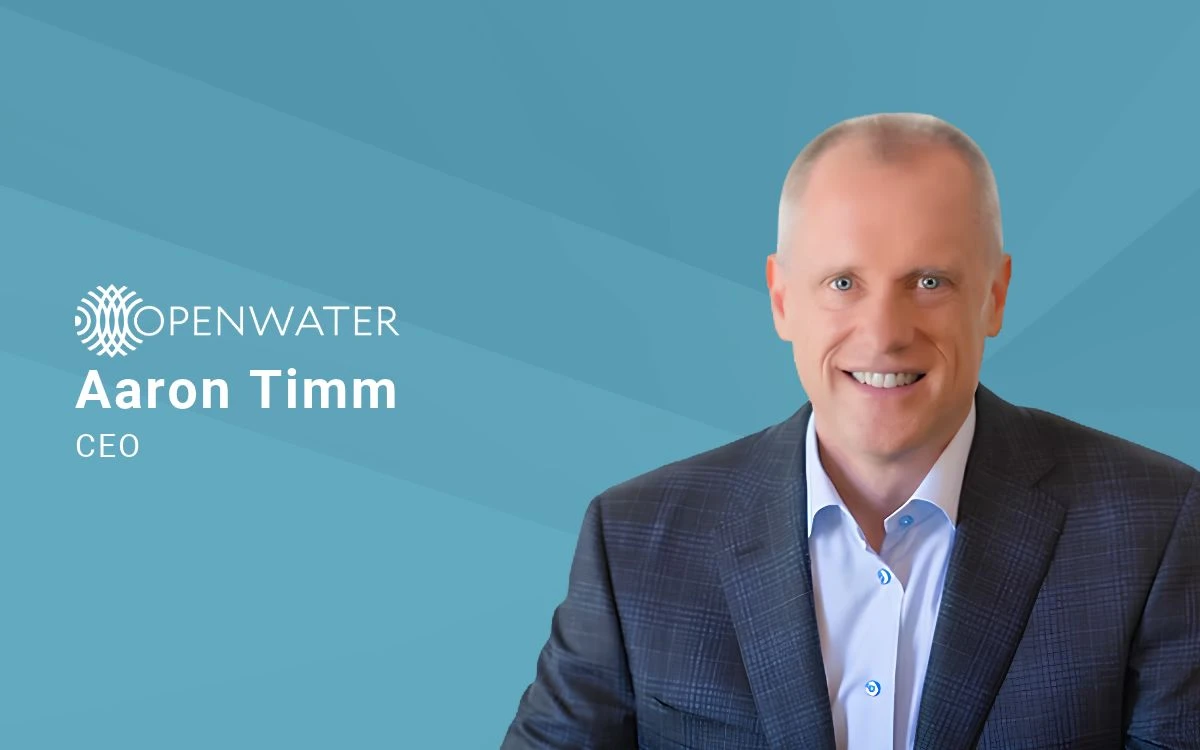
Aaron Timm, CEO of Openwater, leads a medical technology company that has taken the opposite approach. Openwater releases its software, hardware designs and safety data under open licenses. Its portable research platforms, which use light and ultrasound, are now in use at institutions including MIT Lincoln Laboratory, Penn, Brown, and the University of Arizona. Before joining Openwater, Aaron served as general counsel for private and publicly traded companies and as CEO of Synarc and WorldCare Clinical. That gives him a view of regulatory compliance and IP strategy from both the legal side and the executive side.
Company info:
Openwater is a medical technology company pioneering open-source platforms for advanced medical imaging and non-invasive treatments. Founded in 2016, the company combines semiconductor technology, optics, ultrasound, software, and artificial intelligence to develop innovative healthcare solutions. Its mission is to make advanced medical diagnostics and therapeutics more accessible, affordable, and scalable worldwide.