





Secure Passage is developing Model Context Protocol (MCP) server capabilities for Truman, its identity-driven Physical AI Operating System, to let compatible AI applications and agents interact with connected physical security, building and operational technology systems through a common interface. The development is designed to bring information and supported actions from cameras, access control platforms, sensors, robots and drones into AI-assisted investigations and coordinated workflows. By positioning Truman as an operational control plane, Secure Passage aims to connect AI intelligence with real-world actions while keeping permissions, policies and human approvals under organisational control.
Secure Passage Uses MCP to Connect AI Agents With Physical Systems
Artificial intelligence is increasingly moving beyond digital workflows into environments where software interacts with buildings, equipment, security infrastructure and autonomous machines. But these environments are often fragmented across systems from different vendors, each with its own interfaces, data formats and access controls. Connecting AI applications to those systems can require extensive integration work, particularly when organisations need agents to do more than retrieve information.
Secure Passage is addressing that challenge with Model Context Protocol (MCP) server capabilities for Truman, its identity-driven Physical AI Operating System. The development is intended to give compatible AI applications and agents a common way to access information and request actions across connected vendor systems.
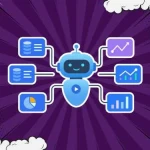
Rather than connecting every AI application separately to individual cameras, access control platforms, sensors and building systems, Truman is designed to act as an intermediary. It brings together information from connected environments with identity, location and operational context, then exposes supported capabilities through its MCP interface.
The announcement represents a move toward making physical infrastructure accessible to AI agents through a common integration layer. It also highlights a growing distinction in enterprise AI: giving an agent access to a system is not the same as giving it authority to act.
MCP Extends AI Access Across Vendor Systems
The Model Context Protocol is an open protocol designed to standardise how AI applications connect to external tools, resources and data sources. Its adoption has created a common integration approach for connecting AI assistants and agents with services beyond their own models.
Secure Passage is applying that approach to physical security and operational environments.
Truman’s MCP server capabilities are intended to expose information and functions from connected systems through a shared interface. This could allow compatible AI clients to retrieve relevant information, investigate events and request supported operations without building separate integrations for every underlying vendor platform.
The company identifies several potential applications:
- Cross-system investigations: Combining identity, access, video detection and location information to build a more complete picture of an incident.
- Operational awareness: Allowing users to ask natural-language questions about facilities, equipment and security activity.
- Coordinated response: Requesting supported actions across connected systems, subject to configured permissions and approval requirements.
- Autonomous operations: Incorporating supported robot and drone capabilities into broader investigation and response workflows.
The practical scope will depend on which vendor integrations are available and what capabilities an organisation has enabled. Secure Passage has not published a detailed integration list or a deployment schedule for the new MCP functionality.
Truman Targets the Legacy Infrastructure Problem
One of the more significant aspects of the announcement is its focus on systems that do not natively support MCP.
Many organisations have already invested in physical security and operational technology infrastructure that remains important to daily operations. Replacing these systems simply to make them compatible with newer AI applications can be expensive and operationally disruptive.
Secure Passage positions Truman as an operational control plane that can expose supported capabilities from existing systems, including legacy access control platforms.
For example, where integrations allow it, an AI agent could request operations such as managing users, updating access permissions or initiating a workflow through Truman. The agent would not need a direct MCP connection to every underlying platform.
This architecture could reduce the complexity of integrating AI with mixed-vendor environments. It also gives organisations a potential route to extend the useful life of existing infrastructure rather than replacing equipment to accommodate new AI interfaces.
The approach is relevant beyond conventional physical security. Secure Passage says the same architecture can extend across connected operational technology, cybersecurity, infrastructure and autonomous systems as additional integrations and capabilities become available.
Identity and Policy Determine What Agents Can Do
Connecting AI agents to physical systems introduces a security challenge that is different from simply making enterprise data available to a chatbot.
An agent interacting with a physical environment may request access changes, trigger operational workflows or coordinate actions involving connected equipment. An incorrectly authorised operation could have consequences beyond a software application.
Secure Passage says Truman combines AI interpretation with deterministic controls. Configured policies determine which actions can be executed automatically and which require human approval.
This creates a separation between an agent’s ability to request an operation and the organisation’s authority to permit it.
The distinction is important as enterprises explore more autonomous AI workflows. An agent may identify a relevant action or recommend a response, but its request should still be evaluated against identity, permissions and operational policy.
Gary Fish, Secure Passage’s chairman and CEO, describes this as a central principle of the platform: AI should be able to work across connected environments without taking control away from the organisation.
The announcement does not provide technical details on how policies are enforced for every integration, how approval workflows are configured or how actions are audited. Those capabilities will be important considerations for organisations evaluating the platform.
Physical AI Moves Beyond Digital Assistants
The development reflects a wider shift toward what is increasingly described as Physical AI: systems that connect AI reasoning with physical environments, equipment and real-world operations.
Unlike a conventional enterprise assistant that primarily generates information, a physical AI system may interact with cameras, access control infrastructure, robots, drones and building management technology.
This creates opportunities for faster incident investigation, better situational awareness and more coordinated operational responses. It also increases the importance of reliable system integration, identity management and controls over autonomous actions.
The market includes several overlapping technology categories, from industrial automation and robotics to physical security, IoT platforms and enterprise AI infrastructure. Companies such as Microsoft, Google and NVIDIA are expanding their AI ecosystems, while specialist providers are working to connect models and agents with specific operational environments.
Secure Passage’s approach focuses on the integration and governance layer between AI applications and physical systems. Its vendor-neutral positioning is intended to make Truman a shared interface across existing infrastructure rather than another isolated security application.
The Next Test Is Reliable, Governed Execution
MCP can simplify how AI applications discover and use external capabilities, but a common interface does not automatically guarantee secure or reliable operations.
Organisations deploying agents into physical environments will need to consider identity verification, permission boundaries, approval processes, audit trails and the consequences of failed or unintended actions. They will also need to assess how different vendor systems behave when connected through an intermediary control layer.
For Secure Passage, the challenge will be demonstrating that Truman can reliably translate AI requests into authorised operations across diverse infrastructure, including legacy platforms.
The company’s announcement signals an effort to make physical environments more accessible to AI agents without requiring organisations to replace their existing technology investments. Whether that model gains traction will depend on integration coverage, operational reliability and the strength of its governance controls.
As AI agents move from answering questions to interacting with the physical world, the ability to connect intelligence with controlled action could become an important part of enterprise AI architecture.
Market Landscape
Physical AI is expanding the scope of enterprise AI beyond digital assistants and software automation. Organisations are exploring ways to connect AI applications with physical security, building management, industrial equipment, sensors and autonomous machines.
Four developments are shaping this market:
- MCP-based integration: Standardised interfaces can make it easier for AI applications to access external tools and information without building individual connections for every system.
- Physical AI and autonomous operations: AI is increasingly being connected to robots, drones, sensors and other systems that interact with real-world environments.
- Legacy infrastructure integration: Enterprises want to introduce AI capabilities without replacing established physical security and operational technology investments.
- Identity-driven AI governance: Permissions, policy enforcement, auditability and human approval become critical when agents can initiate real-world actions.
The competitive opportunity lies in connecting AI models and applications with the infrastructure organisations already operate. Cloud and AI providers supply models and development platforms, while specialist companies are building the integration, orchestration and control layers needed to bring those capabilities into specific environments.
Secure Passage is positioning Truman in this intermediary role. Its differentiation will depend on the breadth of supported vendor integrations and its ability to enforce consistent controls across connected systems.
Top Insights
- Secure Passage is developing MCP server capabilities for Truman, allowing compatible AI agents to access connected physical security and operational systems.
- Truman is designed to provide a common interface across cameras, access control platforms, sensors, building systems, robots and drones.
- The platform aims to extend AI interaction to legacy infrastructure that does not natively support the Model Context Protocol.
- Identity, configured permissions and deterministic policies are intended to govern which agent-requested actions can execute automatically.
- The development reflects growing interest in Physical AI, where agents connect digital intelligence with controlled actions in real-world environments.
Power Tomorrow’s Intelligence — Build It with TechEdgeAI