








HCLTech announced a Global Premier Partnership with Anthropic to accelerate the rollout of the company’s Claude family of large language models in regulated enterprise settings. The collaboration creates a dedicated Anthropic Business Unit, a Center of Excellence, and embeds Claude and Claude Code into HCLSoftware products, aiming to deliver “agentic AI” that meets strict safety, cybersecurity, and governance requirements
Partnership framework and immediate deliverables
The agreement positions HCLTech as Anthropic’s premier systems‑integrator for large‑scale deployments. A new Anthropic Business Unit will provide sandboxed “Fully‑Defined Environments” (FDEs) where enterprises can test Claude‑based agents before production use. HCLSoftware, the company’s ISV arm, will embed Claude and Claude Code into flagship solutions such as HCL BigFix, HCL AppScan, and the AI Force engineering platform. Those integrations are intended to add AI‑driven code remediation, automated security scanning, and digital employee assistance while preserving human‑in‑the‑loop oversight.
What is “Agentic AI” and how Claude differs
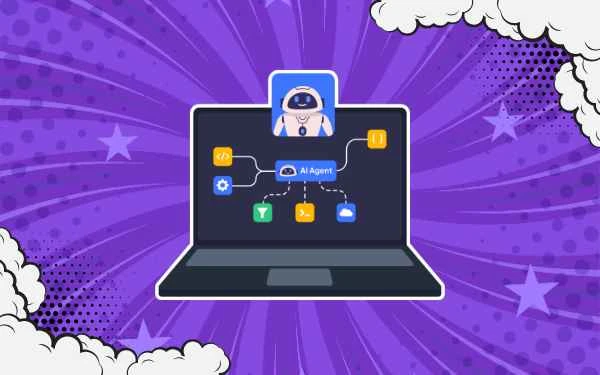
Anthropic markets Claude as a “safety‑first” large language model (LLM) that incorporates constitutional AI principles—pre‑programmed guardrails that steer the model toward low‑risk outputs. Claude Code extends that capability to software development, generating syntactically correct code snippets and offering automated refactoring. The partnership emphasizes “agentic” AI, meaning autonomous software agents that can perform multi‑step tasks (e.g., incident triage, policy compliance checks) without constant human prompting, yet remain bounded by policy layers and exception‑handling workflows.
Technical approach to governed deployments
HCLTech’s Center of Excellence will develop reusable pipelines that combine Claude’s inference APIs with HCL’s existing cloud‑native security stack. Key components include:
- Policy engine that intercepts high‑impact actions and requires human sign‑off.
- Audit logs stored in immutable storage for regulatory compliance.
- Fine‑tuning workflows that let customers train Claude on domain‑specific data while preserving the model’s safety constraints.
This architecture mirrors the “secure sandbox” model used by major cloud providers for generative AI, but adds HCLTech’s deep industry expertise in sectors such as banking, healthcare, and telecom.
Why the deal matters for enterprise AI
Enterprises are increasingly demanding AI that can be trusted with mission‑critical workloads. A recent McKinsey survey found that roughly half of large firms have moved at least one AI use case into production, yet 70% cite governance as the biggest barrier. By coupling Anthropic’s safety‑first LLMs with HCLTech’s integration experience, the partnership directly tackles that barrier, offering a path from proof‑of‑concept to regulated deployment.
Competitive landscape and market context
Microsoft, Google, and Amazon have all launched “enterprise‑ready” AI services that include guardrails, but few provide a dedicated systems‑integrator that also offers ISV‑level product embedding. HCLTech’s dual role—global integrator and software vendor—creates a rare value proposition. IDC projects worldwide AI spending to exceed $500 billion by 2027, with a sizable share allocated to AI governance and compliance tools. The Anthropic partnership positions HCLTech to capture a slice of that growth, especially in regulated verticals where safety is non‑negotiable.
Practical use cases across industries
Early pilots are expected in three domains:
- Financial services: Automated compliance monitoring using Claude‑driven agents that flag suspicious transactions while preserving audit trails.
- Healthcare: Clinical documentation assistants that suggest code‑level updates to electronic health record (EHR) interfaces, subject to clinician approval.
- Manufacturing: Predictive maintenance bots that analyze sensor data, schedule work orders, and adjust production schedules without manual intervention.
In each scenario, the policy layer ensures that any autonomous decision can be overridden or reviewed, aligning with industry‑specific regulations such as GDPR, HIPAA, or PCI‑DSS.
Risks, limitations, and governance challenges
While Claude’s constitutional AI reduces hallucination risk, it does not eliminate it. Continuous monitoring, prompt engineering, and periodic model re‑training remain essential. Moreover, integrating AI agents into legacy IT stacks can expose new attack surfaces; HCLTech’s emphasis on cybersecurity guardrails is intended to mitigate that, but organizations must still allocate resources for ongoing security audits.
Business implications for HCLTech and its clients
For HCLTech, the partnership expands its AI services portfolio beyond consulting into productized AI capabilities, potentially boosting recurring revenue from software licensing and managed services. Clients gain a faster route to AI‑enabled automation, reducing manual effort and operational costs. However, success will hinge on the ability to demonstrate measurable ROI and maintain compliance in highly regulated environments.
Market Landscape
Enterprise AI adoption is entering a maturity phase where safety, governance, and integration depth outweigh raw model performance. Gartner predicts that by 2027, 70% of enterprises will have formal AI governance frameworks in place. IDC’s forecast of $500 billion in AI spending by 2027 highlights a market eager for solutions that combine generative AI with compliance tooling. Competitors such as Microsoft’s Azure OpenAI Service and Google Cloud’s Vertex AI have introduced “guardrails,” but they largely remain platform‑only offerings. HCLTech’s model of embedding Claude directly into its own software suite differentiates it by delivering end‑to‑end, industry‑specific AI functionality rather than a generic API layer.
Top Insights
- HCLTech’s dual role as integrator and ISV lets it embed Anthropic’s safety‑first LLMs directly into enterprise products, a rarity among global tech vendors.
- The partnership targets regulated sectors where AI governance is a make‑or‑break factor, aligning with Gartner’s forecast that 70% of firms will need formal AI controls by 2027.
- Claude’s constitutional AI approach reduces but does not eliminate hallucination risk, making continuous monitoring and human‑in‑the‑loop oversight essential.
- IDC expects AI spending to surpass $500 billion by 2027, with a growing share earmarked for compliance and security solutions—areas where HCLTech aims to capture market share.
- Early use cases span finance, healthcare, and manufacturing, illustrating how agentic AI can automate compliance, documentation, and predictive maintenance while preserving auditability.
Power Tomorrow’s Intelligence — Build It with TechEdgeAI