



Hexaware Technologies has entered a multi-year strategic partnership with Anthropic, becoming a Preferred Partner in the Claude Partner Network as it expands enterprise AI services built around Claude. The agreement brings Anthropic’s AI models into Zerovity, Hexaware’s AI-native engineering platform, and AgentVerse, its agent development and governance platform, which the company says includes more than 600 pre-built agents. The partnership focuses on deploying AI in software engineering and IT operations, with an emphasis on measurable business outcomes rather than traditional effort-based services.
Hexaware Integrates Claude Into Enterprise AI Platforms
IT services providers are increasingly shifting their AI strategies from experimentation and pilot projects toward production deployments tied to operational results. Hexaware Technologies’ new partnership with Anthropic reflects that shift, combining Claude models with the company’s engineering and AI agent platforms to support enterprise modernization and automation.
Under the multi-year agreement, Hexaware becomes a Preferred Partner in Anthropic’s Claude Partner Network. The companies plan to collaborate on go-to-market initiatives, joint solution development, customer deployments, and expanded training for Hexaware’s delivery teams.
Hexaware says more than 1,100 of its professionals are Claude-certified. It plans to use that expertise to deliver services across software engineering and IT operations, where enterprises are looking to address technical debt, security vulnerabilities, backlogs, support tickets, and process bottlenecks.
The partnership builds on an existing commercial relationship that includes Hexaware’s authorization to resell Claude through Amazon Bedrock. The expanded agreement places Claude more directly within Hexaware’s proprietary platforms and delivery model.
Claude Comes to Zerovity and AgentVerse
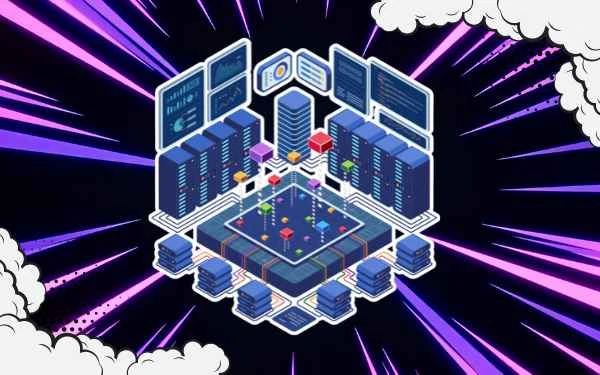
The integration centers on two platforms. Zerovity is Hexaware’s AI-native engineering platform, while AgentVerse supports agent development and governance and reportedly offers more than 600 pre-built agents.
The company says Claude will support its approach to software delivery and operational automation. In engineering workflows, AI models and software agents can assist with tasks such as understanding code, generating or modifying software, and supporting testing and delivery processes. In IT operations, agent-based systems can help process service requests, analyze recurring incidents, and automate defined workflows.
The precise division of tasks between Claude, Zerovity, and AgentVerse was not detailed in the announcement. Hexaware also did not disclose independent benchmarks for productivity improvements, deployment speed, or cost savings.
The platforms nevertheless illustrate an emerging enterprise architecture: foundation models provide reasoning and generation capabilities, while orchestration, tools, policies, and governance layers connect those capabilities to business systems.
Two Routes to Enterprise AI Adoption
Hexaware says customers will be able to approach its services from either a business problem or their existing development environment.
The first route focuses on business outcomes through its Zero Friction Enterprise offerings. These target issues including technical debt, security vulnerabilities, accumulated work backlogs, support tickets, process inefficiencies, and software license costs. Rather than buying a fixed amount of consulting effort, clients are encouraged to define an operational problem and engage Hexaware to address it.
The second route is designed for organizations that want to incorporate AI into existing software development tools. Clients can connect their development tools to the Zerovity harness, which Hexaware says includes token optimization and built-in software delivery agents.
Token optimization can be commercially important because many AI model services are priced partly around token consumption. However, the actual cost of an AI-assisted engineering workflow also depends on model selection, context size, tool usage, human review, testing, and the number of iterations required.
For enterprise technology leaders, the two approaches address different adoption challenges. Outcome-led engagements emphasize business accountability, while tool-led integration can help development teams introduce AI into established engineering processes.
Training and Governance Become Competitive Factors
Hexaware’s reported base of more than 1,100 Claude-certified professionals is part of its strategy to scale delivery beyond isolated proof-of-concept projects. The companies also plan to expand Claude training across Hexaware’s delivery organization.
That capability matters because enterprise AI deployment involves more than access to a capable model. Organizations must connect models to approved data and applications, manage permissions, test outputs, monitor reliability, and establish escalation procedures when automated systems encounter uncertain or consequential decisions.
AgentVerse’s stated focus on development and governance is relevant in this context. As businesses deploy more specialized agents, they need ways to coordinate their tasks and apply consistent controls across workflows. The announcement, however, does not specify the integration’s detailed governance architecture, security controls, or compliance certifications.
What the Partnership Means for Enterprise AI
The agreement strengthens Anthropic’s channel strategy while giving Hexaware another route to differentiate its IT services around AI-enabled delivery. Anthropic gains a services partner with engineering resources and enterprise customer relationships; Hexaware gains deeper access to Claude capabilities for its platforms and client engagements.
The companies are entering a competitive market that includes Microsoft, Google, Amazon Web Services, and other providers offering enterprise AI models, cloud infrastructure, development tools, and agent frameworks. Customers will increasingly compare these options on reliability, integration, security, portability, and total cost—not just model capability.
For enterprise buyers, the central question is whether the combined offering can produce verifiable improvements in delivery speed, service quality, and operating costs. Hexaware’s outcome-based positioning makes those measurements especially important. The partnership establishes a delivery framework, but its commercial impact will depend on results achieved in individual customer deployments.
Top Insights
- Hexaware joins Anthropic’s Claude Partner Network as a Preferred Partner under a multi-year agreement focused on enterprise AI implementation.
- Claude will be integrated into Zerovity for AI-assisted engineering and AgentVerse for agent development and governance.
- Hexaware reports more than 1,100 Claude-certified professionals, supporting enterprise deployments across IT operations and software engineering.
- Customers can pursue outcome-based services or integrate Claude-powered capabilities into existing development tools through Zerovity.
- McKinsey’s 2025 survey found that 62% of respondents said their organizations were experimenting with AI agents, while 23% reported scaling agentic AI in at least one business function.
Power Tomorrow’s Intelligence — Build It with TechEdgeAI