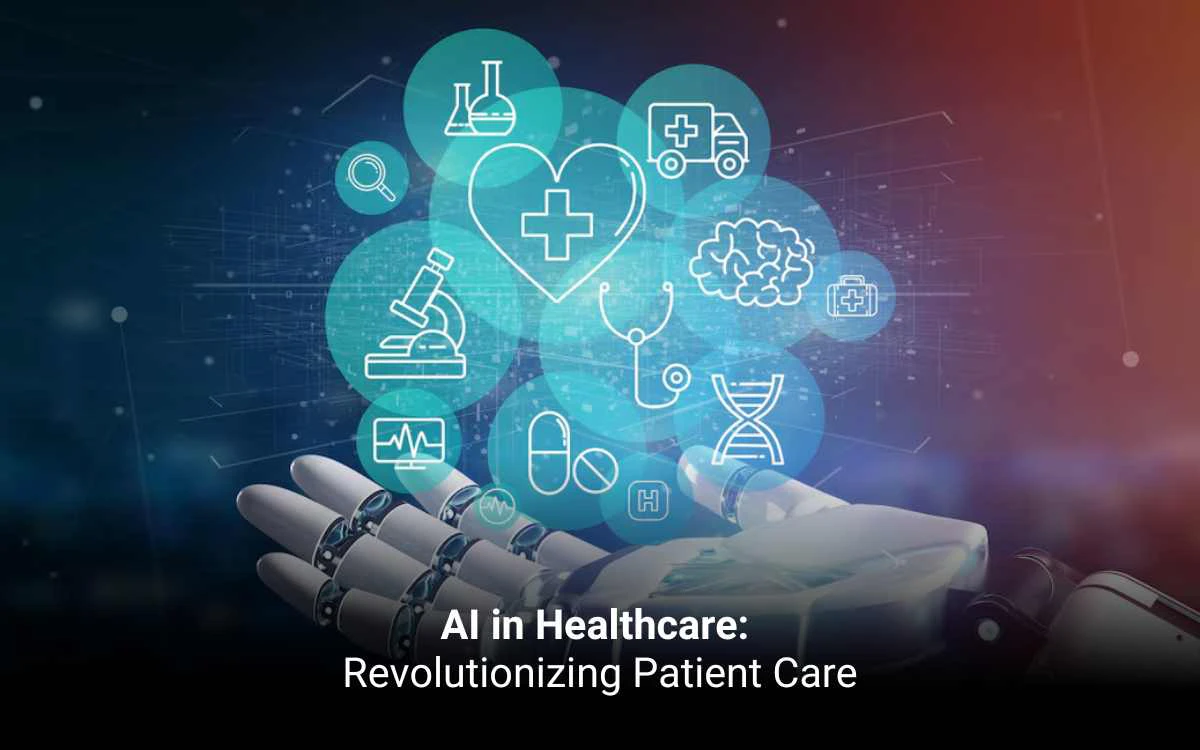
AI is the latest entrant in the healthcare industry, revolutionizing patient care, medical research, and hospital management. From early detection of diseases to personalized treatments, it facilitates doctors’ diagnosis and treatment of patients. Technology such as ML, NLP, and predictive analytics is improving healthcare efficiency.
AI in healthcare can analyze medical data in seconds, which would take manual labor longer to process. It allows doctors to make fast and informed decisions, improving patient outcomes. AI-powered imaging tools, for instance, can detect diseases like cancer at an early stage, increasing the chances of successful treatment. Similarly, AI-driven chatbots and virtual assistants enhance patient engagement by responding to health-related queries and scheduling appointments.
This article will talk about the importance of AI in healthcare.
Why is AI Important in Healthcare?
The answer lies in the demand for better and affordable healthcare solutions. With rising populations and a growing burden of chronic diseases, healthcare systems are evolving. AI healthcare solutions can optimize hospital workflows and reduce medical errors. In critical situations, predictive analytics can foresee potential health risks, allowing doctors to take preventive measures.
Another key reason for AI’s importance in healthcare is its role in drug discovery and medical research. AI algorithms analyze chemical compositions and predict drug effectiveness, speeding up the process. It is crucial in situations where rapid vaccine and drug development is needed.
Finally, AI in healthcare is facilitating medical accessibility. Remote patient monitoring allows doctors to track patients’ health conditions in real-time, even in rural areas.
Key Applications of AI in Healthcare: From Diagnostics to Drug Discovery
Let’s explore some of the most impactful ways AI makes a difference in healthcare.
1. AI in Diagnostics
AI in healthcare improves diagnostic accuracy. Traditional diagnostic methods rely on a doctor’s expertise and manual analysis, sometimes leading to errors or delays. ML-powered AI healthcare tools quickly scan medical images, detect anomalies, and provide precise results.
Example: AI-powered imaging tools analyze X-rays, MRIs, and CT scans. They detect early signs of diseases such as cancer and Alzheimer’s before symptoms appear.
2. AI in Personalized Treatment Plans
AI in medicine helps tailor treatments based on an individual’s lifestyle, and medical history. AI healthcare platforms analyze patient data and predict which treatments will be most effective
Example: In Oncology, patient medical records can be compared with research papers to suggest the best cancer treatments.
3. AI in Robotic Surgeries
Robot-assisted surgery in AI healthcare is gaining traction. AI-powered robots can assist surgeons with high-risk operations improving success rates.
Example: Robotic surgical assistants help doctors perform minimally invasive procedures with accuracy.
4. AI-Powered Virtual Assistants and Chatbots
AI healthcare chatbots and virtual assistants provide instant support for medical inquiries. They help schedule appointments, remind patients for medication, and offer mental health support.
Example: Patients can chat with the AI-powered bot, which assesses their symptoms and suggests when to consult a doctor.
5. AI in Drug Discovery and Development
Developing a new drug is a lengthy process that costs billions of dollars. AI in healthcare can analyze molecular structures, predict drug efficacy, and identify potential treatments much faster.
Example: AI platforms can accelerate drug discovery for Parkinson’s and cancer.
6. AI in Predictive Analytics and Preventive Healthcare
AI healthcare systems analyze patient data to predict future health risks and suggest preventive measures. It helps doctors and healthcare providers take steps before a disease progresses.
Example: AI-driven predictive analytics tools have been used to predict patient diseases, allowing doctors to intervene early and prevent severe complications.
7. AI for Medical Research and Clinical Trials
Clinical trials often take years, but AI in medicine accelerates the process by identifying suitable candidates, analyzing trial data, and predicting treatment responses.
Example: AI platforms use deep learning to analyze billions of molecular structures, speeding up drug research and reducing trial-and-error approaches.
8. AI in Administrative Work and Hospital Management
AI optimizes hospital workflows by automating patient records, billing, and appointment scheduling. It allows doctors and nurses to focus more on patient care.
Example: An AI healthcare automation platform streamlines administrative processes, reduces hospital costs, and improves efficiency.
9. AI in Mental Health Support
AI in healthcare is making a difference in mental health care. AI-powered chatbots and virtual therapists provide counseling, detect early signs of depression, and offer cognitive behavioral therapy.
Example: AI-driven chatbot, offers mental health support by engaging users in conversations and providing therapeutic techniques.
The Benefits of AI-Powered Healthcare Solutions
Here’s a closer look at the key benefits of AI-powered healthcare solutions.
1. Improved Diagnostic Accuracy
AI diagnostic tools analyze medical images, lab results, and patient data, reducing the chances of misdiagnosis. It helps doctors detect diseases accurately and at earlier stages.
Example: AI-driven imaging tools like Google’s DeepMind can scan X-rays, MRIs, and CT scans to detect abnormalities.
2. Increased Efficiency and Time-Saving
From managing medical records to patient admissions, AI healthcare solutions optimize hospital workflows and reduce administrative burdens.
Example: AI platforms streamline administrative tasks such as billing, insurance processing, and appointment scheduling.
3. Personalized Medicine and Treatment Plans
AI in healthcare has a personalized approach to treatment by analyzing a patient’s medical history. This leads to customized treatment plans.
Example: AI platforms review patient data to recommend the most suitable treatment based on individual cases.
9. Reduced Medical Errors and Improved Patient Safety
AI cross-checks medical records, suggesting the most effective treatments, and alerting doctors about potential drug interactions or dosage issues.
Example: AI-driven electronic health record (EHR) systems can detect prescription inconsistencies and flag potential risks, ensuring safer patient care.
10. Making Healthcare More Accessible
AI in healthcare offers telemedicine, diagnostics, and remote consultations, making quality healthcare available to those in rural areas.
Example: AI telemedicine platforms allow patients to consult doctors remotely, reducing the need for travel.
Addressing the Challenges of AI Implementation in Healthcare
Below, we analyze the key challenges AI in healthcare faces and possible solutions.
1. Data Privacy and Security Risks
Challenge: AI healthcare systems rely on patient data, including medical records and imaging scans. The data is vulnerable to cyberattacks and data breaches.
Solution:
- Implement encryption and cybersecurity measures to protect patient data.
- Ensure compliance with global data protection laws, such as HIPAA (Health Insurance Portability and Accountability Act) and GDPR (General Data Protection Regulation).
- Use AI models to train on data without transferring it to a central server, reducing privacy risks.
2. Regulatory and Ethical Challenges
Challenge: AI in healthcare must meet regulatory approvals before deployment. It must comply with FDA (Food and Drug Administration), EMA (European Medicines Agency), and other health authority guidelines, resulting in slow adoption.
Solution:
- Work closely with regulatory bodies to create guidelines for AI in healthcare.
- Develop transparent AI models, ensuring that decision-making processes are ethical.
- Streamline regulatory approvals and promote collaboration between AI developers, healthcare providers, and legal experts.
3. Bias in AI Algorithms
Challenge: AI models are trained on existing healthcare data, which may be biased toward specific demographics, leading to inaccurate outcomes. If these tools are not trained on diverse datasets, they may provide incorrect diagnoses.
Solution:
- Use diverse datasets to train AI models, ensuring fair representation across different races, genders, and socioeconomic backgrounds.
- Continuously audit AI models to identify and eliminate biases.
- Implement explainable AI (XAI) techniques to ensure transparency in decision-making.
4. Lack of AI Expertise Among Healthcare Professionals
Challenge: Many doctors and hospital administrators are not trained in AI healthcare technologies, making it challenging to integrate into everyday medical practice.
Solution:
- Offer AI training programs and workshops for healthcare professionals.
- Develop user-friendly AI interfaces that require minimal technical expertise to operate.
- Encourage collaboration between AI specialists and medical professionals to ensure AI solutions meet practical healthcare needs.
5. Integration with Existing Healthcare Systems
Challenge: Hospitals and clinics often use systems incompatible with modern AI technologies. Integrating AI into these outdated systems can be expensive and time-consuming.
Solution:
- Develop AI solutions that are compatible with existing healthcare infrastructure.
- Encourage gradual adoption, starting with AI-powered administrative tools before implementing further clinical applications.
- Invest in cloud-based AI healthcare platforms to simplify integration
Limitations of AI in Healthcare
Despite solutions to major challenges, AI in healthcare has limitations that must be acknowledged.
1. AI Lacks Human Judgment and Empathy
AI can process data and provide recommendations but cannot replace a doctor’s experience and ability to understand a patient’s emotions and concerns. Human judgment remains essential in making final medical decisions.
2. Risk of Over-Reliance on AI
There is a risk that healthcare providers may become too dependent on AI, which could reduce their clinical skills and critical thinking. AI should be a supportive tool rather than a replacement for medical expertise.
3. Ethical Concerns Regarding AI Decision-Making
AI algorithms make decisions based on data, but they lack ethical reasoning. For example, if an AI system prioritizes treatment for limited hospital resources, how does it decide who receives care first? Such moral dilemmas require human oversight.
Conclusion
AI in medicine is making healthcare faster and accessible. But the journey is just beginning. AI in medicine continues to evolve; we must ensure it remains ethical and unbiased. The future of AI healthcare is not just about algorithms—it’s about better patient care and a healthier world for all.
Read the Latest Insights in AI Innovation