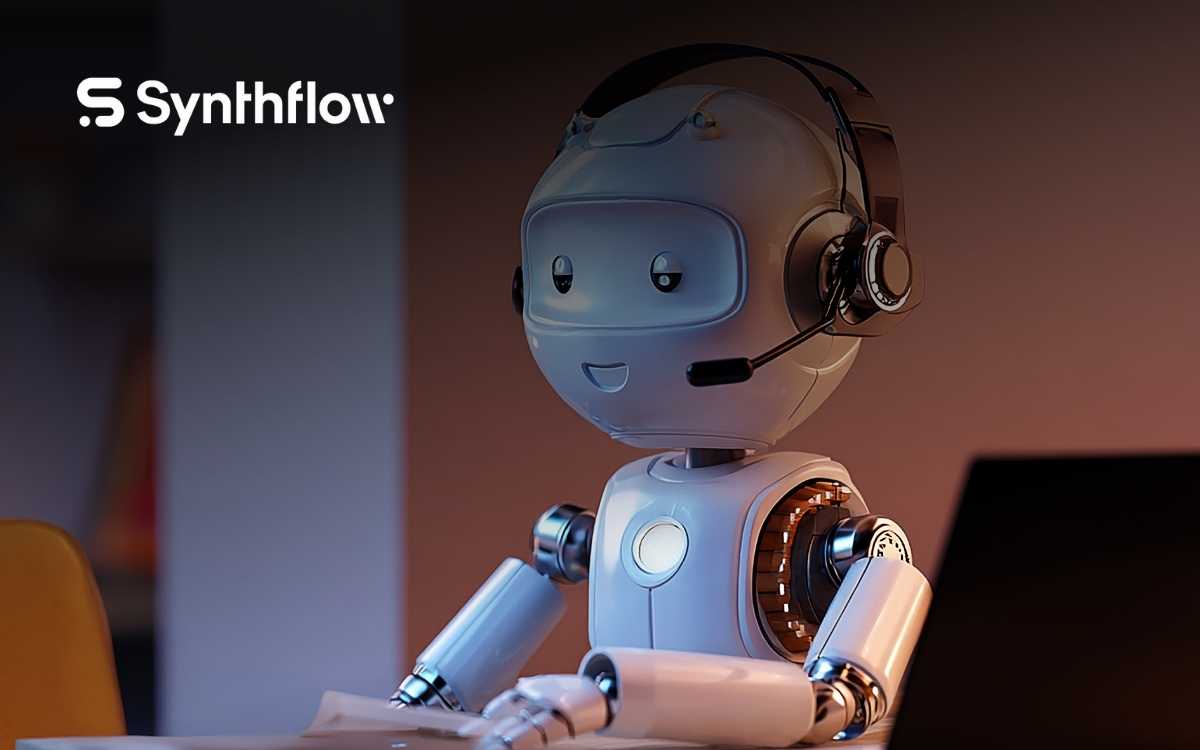


Enterprise voice AI has promise—but also a notorious failure rate. Large call centers, healthcare operations, and insurance providers have all learned the hard way that deploying AI at scale is rarely just about the model itself. Latency, brittle integrations, routing errors, compliance issues, and inconsistent behavior often derail even the most advanced conversational AI systems.
Synthflow AI aims to fix that. Today, the company unveiled the BELL Framework—a new OpenAI-powered lifecycle system designed to remove the biggest risks enterprises face when deploying voice AI in production. The framework is already embedded in Synthflow’s platform, which has powered over 65 million calls across 1,000+ enterprise deployments.
According to CEO and Co-Founder Hakob Astabatsyan, “BELL ensures your voice agents behave as expected before customers ever hear them. It is the difference between hoping your AI works and knowing it will perform on every call.”
BELL: Build, Evaluate, Launch, Learn
The BELL Framework introduces a repeatable, measurable lifecycle for enterprise voice agents, breaking down the process into four stages:
1. Build: A visual flow designer allows teams to map conversation logic, manage variables, and orchestrate multi-agent systems, ensuring predictable outcomes.
2. Evaluate: A test center simulates hundreds of end-to-end phone calls, scoring agents on accuracy, task completion, and CSAT before going live.
3. Launch: Synthflow runs on its own global telephony infrastructure, avoiding third-party vendors. This delivers sub-100 ms latency and 99.9% uptime, critical for real-time customer interactions.
4. Learn: Granular analytics, logs, and Auto-QA dashboards track every call, webhook, and event, enabling continuous improvement and operational insights.
By addressing all layers that traditionally cause failure—telephony, testing, orchestration, and monitoring—Synthflow says BELL makes success repeatable rather than a gamble.
Why Voice AI Fails and How BELL Fixes It
Large enterprises face millions of repetitive calls—billing inquiries, scheduling, identity verification—that bog down human agents and extend hold times. Voice AI is a natural solution, but most deployments crumble under hidden friction points:
- Latency spikes that disrupt the conversation flow
- Routing issues that misdirect or drop calls
- Brittle integrations with CRM or backend systems
- Unpredictable agent behavior under real-world conditions
Co-Founder and CTO Sassun Mirzakhan-Saky explains, “Most voice AI dies in production because teams cannot control the layers that define performance. By owning the telephony, testing, and orchestration layers, we have removed that uncertainty. BELL makes success repeatable.”
OpenAI Models Powering Enterprise Reliability
Synthflow leverages OpenAI’s GPT-4.1, 5, and 5.1 models across different stages, selecting models based on reasoning capabilities and real-time performance optimization.
Eva Spannagl, Head of Startups, DACH at OpenAI, noted, “Synthflow is a great example of how to build on our frontier AI models to create reliable, production-ready outcomes from day one.”
By combining OpenAI’s models with BELL, Synthflow provides enterprise-grade voice agents that are compliant, performant, and scalable.
Rapid Deployment with Compliance Built-In
One of the biggest challenges for enterprise AI adoption is compliance. Synthflow’s platform addresses this head-on:
- SOC 2, HIPAA, and GDPR compliant
- No-code platform enabling teams to design, test, and deploy AI voice agents in weeks, not months
- Full lifecycle visibility from agent creation to real-time call analytics
This combination of speed, reliability, and compliance makes BELL particularly attractive to industries like healthcare, insurance, and customer support, where mistakes can be costly and regulatory oversight is stringent.
Implications for Enterprise AI
The launch of BELL highlights a key trend in the enterprise AI market: success is rarely about bigger models, it’s about the ecosystem around them.
For organizations:
- Voice AI can finally move beyond experimental pilots.
- IT and operations teams gain visibility and control over AI interactions at scale.
- Enterprises can reduce call center costs, improve CSAT, and confidently deploy AI in mission-critical workflows.
Synthflow’s approach signals a maturation of voice AI for enterprise use, where guarantees, not hope, drive adoption.