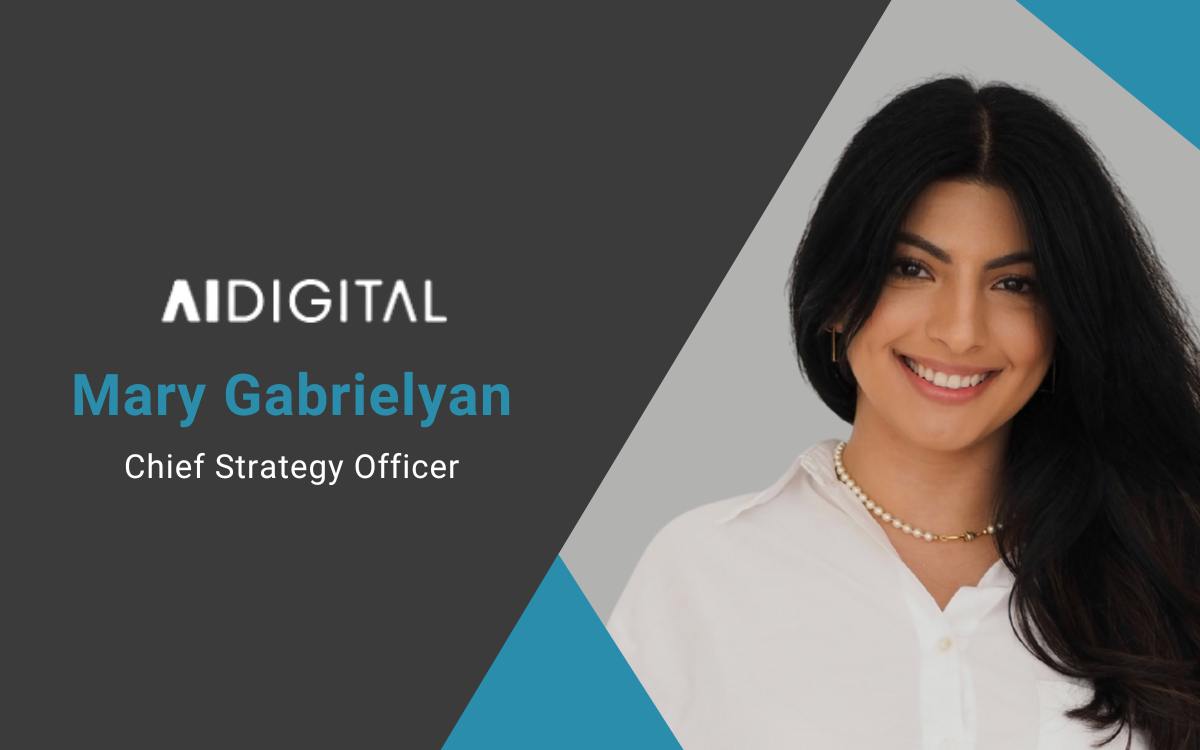

Mary Gabrielyan, Chief Strategy Officer, AI Digital
The question marketers once asked was simple: Will consumers find us?
Today, that question is evolving into something more nuanced: Will AI consider us credible enough to recommend?
This shift is quietly, but fundamentally, reshaping the marketing landscape. As AI-powered discovery tools become an increasingly common starting point for product research, brands face a new reality: traditional strategies alone are no longer sufficient to ensure consideration.
AI Digital’s 2026 Media Trends Report, drawing from analysis of over 10,000 campaigns, 25+ billion daily bid requests, and proprietary research across the programmatic advertising ecosystem, reveals how dramatically the ground has shifted.
From Search Optimization to AI Optimization
For much of the past two decades, search engine optimization shaped digital marketing strategy. Brands focused on keywords, backlinks, and page rank, all aimed at appearing visible within a familiar list of blue links.
That model is now evolving. AI-driven discovery does not present options, it consolidates answers, drawing from sources it determines to be authoritative, credible, and relevant. As more consumers rely on AI platforms to inform purchase decisions, brands that are absent from these trusted sources risk being overlooked entirely.
This is not about mastering another algorithm. It is about rethinking how authority is established in the first place. AI systems tend to prioritize verified product information, credible reviews, respected publications, and strong first-party content. They also look for consistency across touchpoints and narratives supported by evidence.
The First-Party Data Imperative
This shift places first-party data at the heart of competitive strategy, not simply as a targeting tool, but as a means of narrative control.
When AI systems assemble an understanding of a brand, they draw from a distributed ecosystem of signals, reviews, forums, news coverage, social conversations, and owned content. Without robust first-party assets such as detailed product information, customer validation, and clear thought leadership, brands leave that narrative largely in the hands of third parties and algorithms.
Campaigns supported by strong first-party data strategies delivered 18% better working media efficiency and 26% higher engagement than those relying primarily on third-party signals. The difference is not about collecting more data, it is about ensuring that what you know meaningfully informs how AI represents your brand.
Where Channels Converge: The Role of CTV and Retail Media
While AI-driven discovery is reshaping the top of the funnel, meaningful change is also happening further downstream. The convergence of Connected TV and retail media networks is creating new opportunities for closed-loop measurement.
CTV now reaches the majority of U.S. households, delivering strong video completion rates and increasingly measurable outcomes. At the same time, retail media networks are evolving beyond lower-funnel tactics, using first-party purchase data to inform activation across CTV, display, social, and in-store environments. Together, these channels make it possible to more clearly connect awareness with purchase behavior.
The opportunity lies in integration. When AI-driven discovery, premium CTV storytelling, and retail media measurement are aligned, they create a reinforcing system, one that introduces the brand, builds trust, and validates intent through real-world outcomes.
This is not about managing three separate strategies. It is about recognizing how consumers naturally move through decision-making in 2026 and designing marketing systems that reflect that journey.
Navigating Fragmentation with Clarity
Even as these opportunities emerge, the broader ecosystem continues to fragment. Identity signals are increasingly dispersed, measurement standards vary by platform, and walled gardens remain deeply entrenched. AI-driven optimization tools can add further complexity when their inner workings lack clarity.
The answer is not consolidation for its own sake, nor is it accepting opacity as unavoidable. Instead, it is about building strategies that emphasize interoperability and clarity from the outset.
Practically speaking, this means asking more of optimization tools, investing in first-party data that works across platforms, prioritizing credibility signals that endure beyond any single channel, and focusing on incrementality rather than attribution alone.
What This Means for Marketers
The marketers best positioned for success will recognize credibility as a long-term asset and first-party data as the foundation that sustains it. They will move beyond awareness-only thinking toward integrated strategies that connect AI-driven discovery with premium storytelling and measurable retail outcomes.
They will also begin to think less in terms of channels and more in terms of ecosystems, acknowledging that consumers seek recommendations from AI, encounter brands across multiple environments, and make decisions based on the accumulation of credible signals over time.
AI has already reshaped discovery. The real question is whether brands are investing in the credibility infrastructure, data capabilities, and integrated strategies required to succeed within it.
Because in 2026, discoverability alone will not be enough. Credibility will matter more, and unlike awareness, it is not something that can be bought. It has to be built.

Mary Gabrielyan, Chief Strategy Officer at AI Digital, has over a decade of experience in media and digital marketing. She excelled as Head of Strategy and Planning and later as Head of Digital at Publicis Media, collaborating with global brands like GSK, Jaguar Land Rover, Samsung, and Visa. As CMO for an IT B2B eCommerce firm, she boosted revenue and brand presence. A runner with dreams of starting her own farm, Mary’s strategic expertise drives success.