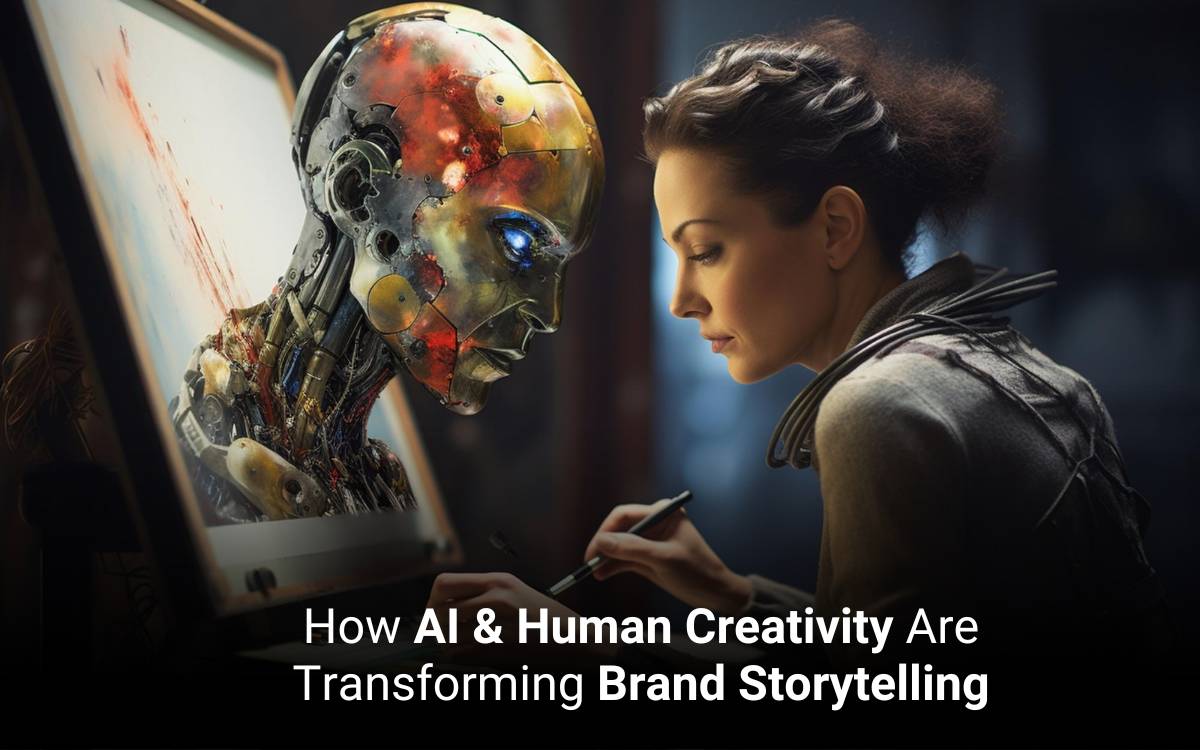


A customer watches a video of a certain brand on a social media platform and immediately receives a follow-up message on what they are lingering on. Later, the very same customer opens YouTube and sees a story continuation with the same brand voice, personalized. Collaboration is happening in the background, AI and Human Creativity working together to create Brand Storytelling.
A new era of Hybrid Storytelling, powered by AI, fuels human creativity. For decades, brand stories have been built around people. When trying to engage customers, creative teams had to make do with a paucity of tools. Now attention spans are shorter, content cycles faster, and customer expectations sharper. They want stories that understand them.
The article now tells how AI relates to human creativity to change brand storytelling.
Why You Need AI + Human Creativity for Brand Storytelling
Here’s why this hybrid approach is essential to brands fighting for attention and trust.
1. AI Reveals What Audiences Want; Human Creativity Shapes Why It Matters
AI does that by analyzing intent data and engagement history to uncover what resonates with decision-makers. Human Creativity then turns those insights into narratives to speak to pain points.
Example: Through AI, a cybersecurity company identifies the CIOs that are engaging with most “zero-trust onboarding” content. Creative strategists shaped that into a storyline about “building digital fortresses from the inside out.”
2. AI Personalizes; Human Creativity Ensures It is Authentic
Personalization is table stakes for buying groups today. AI enables personalization at scale across channels; Human Creativity ensures the messaging is on-brand and on-voice for the brand.
Example: An AI-powered SaaS platform personalizes demo invitations based on the challenges at hand in a particular industry, while human copywriters finish the narrative to make it sound reflective.
3. AI Speeds Up Production; Humans Enhance the Quality
Artificial intelligence tools can prepare a script, visuals, and a storyboard. Creative teams then refine it, adding emotion and depth to the story. This reduces turnaround time while enhancing the impact.
Example: A marketing automation company uses Gen AI to generate different iterations around the launch of a product. Humans pick the strongest idea and build out a story around “automation that empowers, not replaces.”
4. AI Optimizes in Real Time; Humans Define Direction
AI monitors performance and recommends creative adjustments. Humans determine which recommendations are in line with long-term brand positioning.
Example: A cloud provider analyzes engagement in video content and detects audience drop-off during technical jargon. AI flags the pattern; human storytellers rewrite key segments.
5. AI Handles Complexity, Humans Provide Context
Brand narratives normally involve product complexity, multiple stakeholders, and long buying cycles. AI helps simplify the messaging; human creativity ensures the context.
For example, a fintech API firm deploys AI to visualize complicated workflows. The creatives then write a story about “making financial infrastructure invisible” that resonates with CTOs.
6. AI Supports Decision-Making; Humans Build Relationships
While AI may inform content decisions, trust remains created upon emotional connections. The most powerful form of Brand Storytelling fuses AI insights with human empathy.
Example: A logistics technology company uses AI to map friction points in the customer journey, while humans create a brand story of partnership and resilience.
The Future: Storytelling That Evolves with AI + Human Creativity
Here’s what the future looks like when AI and Human Creativity merge to shape brand storytelling.
1. Stories will Evolve in Real-time, Not in Campaign Cycles
AI will interpret audience sentiment,content engagement, and behavioral signals. Human creativity will then use those insights to refine messaging and evolve brand narratives.
Example: A cloud infrastructure provider changes its messaging on “resilience” in the middle of a wave of global outages. AI surfaces surging interest in risk mitigation; creative teams create new plot lines around them.
2. AI Storytelling Will Guide Buyer Journeys
AI will predict what stories buyers need at each stage of a decision. Human Creativity will turn predictive insights into emotive stories.
Example: A digital payment platform predicts when prospects are about to explore cross-border capabilities. The creative team deploys an explainer on a “borderless scale” right before the spike.
3. Immersive Brand Assets Will Replace Static Ones
AI will dynamically create visual and narrative experiences, such as simulations or 3D product stories. Human input will help mold ideas so that technology will feel inspiring.
Example: A manufacturing automation brand has AI-powered “choose your workflow” interactive content. Human creatives design the storyline: “Factories that think like your best engineers.”
4. Stories Will Become Two-Way Conversations
AI chat interfaces, virtual brand advisors, and adaptive interfaces enable buyers to “talk to the story.” Humans define the tone and arcs that make those conversations trustworthy.
Example: A cybersecurity provider uses an AI advisor to guide a CISO through scenarios of threats. Human writers develop narratives on “confidence in uncertainty” that reinforce brand trust.
5. Creativity will Scale Without Losing its Emotional Core
AI will automate repetitive layers of production. Human creativity shall create bold concepts, emotional depth, and cultural relevance.
Example: A supply-chain analytics company uses AI to generate targeted, customized content variations for various worldwide audiences. Human work focuses on the message of “Intelligence that moves the world.”
Conclusion
AI is not a replacement for human creativity but a complement to it, in constructing stories that captivate attention and loyalty. It’s now time to reimagine your storytelling ecosystem. Rethink your creative processes and arm your teams with AI engineering in a workflow where the story will be led by data while being elevated by creativity.

Paramita Patra is a content writer and strategist with over five years of experience in crafting articles, social media, and thought leadership content. Before content, she spent five years across BFSI and marketing agencies, giving her a blend of industry knowledge and audience-centric storytelling.
When she’s not researching market trends , you’ll find her travelling or reading a good book with strong coffee. She believes the best insights often come from stepping out, whether that’s 10,000 kilometers away or between the pages of a novel.